The future of learning stands at a revolutionary crossroads where advanced technologies merge with human cognition to create unprecedented educational experiences. Traditional classrooms and static curricula are rapidly giving way to intelligent systems that adapt in real time to individual learner needs and neural responses.
This article explores how neuroadaptive technologies are fundamentally transforming cognitive development across educational institutions worldwide. You will discover the mechanisms behind personalized education platforms that respond to brainwave patterns and emotional states. We examine how artificial intelligence drives adaptive learning systems capable of optimizing knowledge retention and skill acquisition.
From immersive virtual environments to biometric feedback integration, the future of learning promises transformation beyond anything previous generations experienced. Prepare to understand the scientific foundations and practical applications reshaping how humanity acquires and processes information.
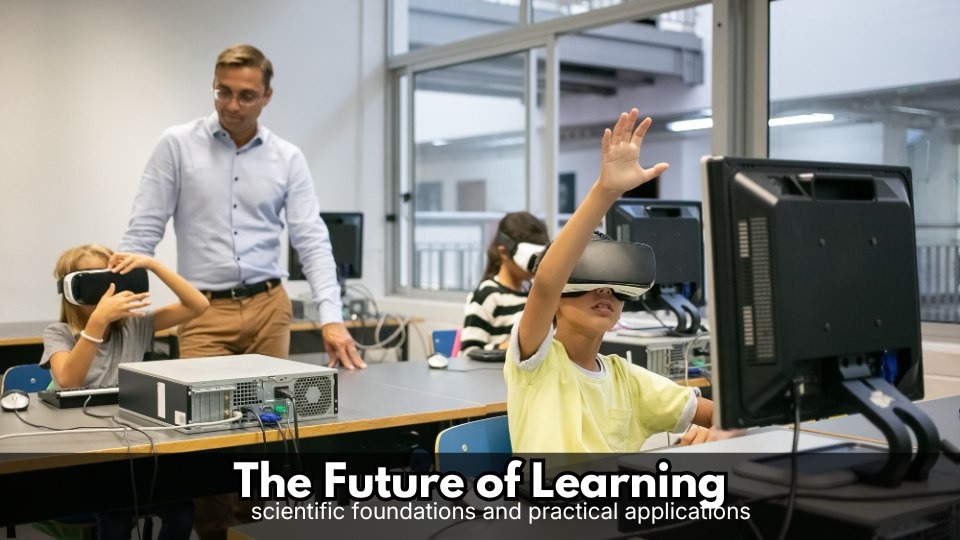
Defining Neuroadaptive Educational Technologies In The Future of Learning
The future of learning encompasses intelligent systems that monitor physiological and cognitive responses to customize educational experiences dynamically. These technologies utilize sensors measuring brainwave activity, eye movement patterns, heart rate variability, and skin conductance to assess learner engagement and comprehension levels continuously.
Neuroadaptive platforms process this biometric data through sophisticated algorithms that adjust content difficulty, pacing, and presentation formats instantaneously. When systems detect confusion or disengagement, they automatically modify instructional approaches to recapture attention and optimize understanding.
This represents a fundamental departure from standardized education where all students receive identical instruction regardless of individual differences in processing speed, prior knowledge, or preferred modalities.
Historical Evolution of Educational Technology
Educational innovation has progressed through distinct phases each building upon previous technological capabilities. Understanding this evolution provides essential context for appreciating current developments and anticipating future trajectories.
Early Technological Integration
Educational technology began with simple audiovisual aids introduced during the early twentieth century. Filmstrips, overhead projectors, and educational radio broadcasts represented initial attempts to enhance traditional instruction through multimedia engagement.
The computer revolution of the 1980s brought programmed instruction and drill practice software into classrooms. These early applications followed rigid branching logic with predetermined pathways based on correct or incorrect responses.
Digital Transformation Era
Internet connectivity transformed educational delivery by enabling distance learning and access to global information repositories. Learning management systems emerged to organize course materials and track student progress through standardized metrics.
The future of learning began taking shape as artificial intelligence capabilities advanced sufficiently to enable genuine personalization. Machine learning algorithms started analyzing learner behavior patterns to predict optimal instructional sequences.
The Science Behind Adaptive Learning Systems
Modern educational technologies rest upon decades of cognitive science research and neuroscientific discoveries. These scientific foundations ensure that adaptive systems produce genuine learning improvements rather than superficial engagement metrics.
Cognitive Load Theory Applications
Neuroadaptive technologies apply cognitive load theory principles by monitoring working memory capacity in real time. When biometric indicators suggest cognitive overload, systems reduce information complexity and introduce scaffolding support automatically.
The following mechanisms enable personalized education delivery:
- Electroencephalography sensors detect attention fluctuations and comprehension indicators through brainwave pattern analysis
- Eye tracking systems identify areas of focus and confusion by monitoring gaze patterns and pupil dilation
- Facial recognition algorithms assess emotional states including frustration, boredom, and engagement levels
- Physiological monitors measure stress responses through heart rate and galvanic skin response changes
- Behavioral analytics track interaction patterns including response times, navigation choices, and revision behaviors
These integrated data streams create comprehensive learner profiles enabling unprecedented instructional customization.
Neural Plasticity and Optimized Timing
The future of learning leverages neuroscience research on optimal learning windows and memory consolidation processes. Adaptive systems schedule content review at scientifically determined intervals maximizing long term retention through spaced repetition algorithms.
Research demonstrates that information presented during peak receptivity periods embeds more deeply within neural networks. Biometric monitoring identifies these windows individually rather than relying on population averages.
Transformative Benefits for Learners and Institutions
The advantages of neuroadaptive educational technologies extend across multiple stakeholder groups including students, educators, institutions, and employers. These benefits justify the substantial investments required for implementation.
Individualized Learning Pathways
Every learner processes information differently based on prior knowledge, cognitive abilities, and environmental factors. Neuroadaptive technologies eliminate the compromise inherent in standardized instruction by creating truly individualized pathways through curriculum content.
Students struggling with specific concepts receive additional practice and alternative explanations automatically. Advanced learners progress rapidly without artificial constraints imposed by group pacing requirements.
The future of learning recognizes that optimal instruction varies not only between individuals but within the same individual across different subjects, times, and contexts.
Enhanced Engagement and Motivation
The future of learning addresses chronic disengagement problems plaguing traditional education. When content dynamically adjusts to maintain optimal challenge levels, learners experience flow states characterized by deep immersion and intrinsic motivation.
Gamification elements integrated with adaptive difficulty create compelling experiences that sustain attention across extended learning sessions. Immediate feedback loops reinforce progress and maintain momentum toward mastery.
Accessibility and Inclusion
Adaptive technologies provide unprecedented support for learners with diverse needs. Students with learning differences receive accommodations automatically without requiring formal diagnosis or special arrangements. Systems detect individual requirements and adjust accordingly.
Visual learners receive enhanced graphical representations while auditory processors access narrated content seamlessly. This flexibility ensures all learners access curriculum through their strongest modalities.
Challenges Confronting The Future of Learning
Despite tremendous potential, neuroadaptive educational technologies face significant obstacles requiring careful navigation. Acknowledging these challenges enables realistic planning and proactive problem solving.
Privacy and Data Security Concerns
Collecting biometric and behavioral data raises significant ethical questions regarding student privacy. Educational institutions must establish robust governance frameworks protecting sensitive information from misuse or unauthorized access.
Parents and learners rightfully question who owns this data and how it might influence future opportunities. The future of learning requires thoughtful policy development balancing personalization benefits against privacy preservation.
Transparent communication about data collection purposes and protections builds trust essential for widespread adoption.
Infrastructure and Equity Issues
Neuroadaptive technologies demand substantial infrastructure investments including sensors, processing power, and connectivity. Schools serving disadvantaged communities often lack resources for implementation, potentially widening existing achievement gaps.
Ensuring equitable access remains critical for realizing the democratizing potential these technologies offer. Without deliberate intervention, advanced educational tools may benefit privileged populations disproportionately.
Public policy must address funding disparities preventing universal access to transformative learning technologies.
Teacher Role Evolution
Educators face significant professional transitions as adaptive systems assume traditional instructional functions. The future of learning positions teachers as facilitators, mentors, and intervention specialists rather than primary content deliverers.
This transition requires extensive professional development and cultural shifts within educational institutions accustomed to teacher centered models. Many educators feel threatened by technologies perceived as replacing their expertise.
Successful implementation depends upon positioning teachers as essential partners rather than obstacles to technological advancement.
Real World Implementation Examples
Examining current deployments provides concrete evidence of neuroadaptive technology effectiveness across diverse educational contexts. These examples demonstrate practical applications beyond theoretical possibilities.
Corporate Training Applications
Major corporations deploy adaptive learning platforms for employee development across global workforces. These systems reduce training time significantly while improving skill acquisition outcomes compared to traditional approaches.
Personalized education pathways allow employees to focus on genuine development needs rather than reviewing already mastered content. Organizations report substantial return on investment through reduced training duration and improved performance metrics.

Higher Education Innovations
Universities experiment with neuroadaptive technologies in high enrollment courses where individual attention proves impossible through conventional methods. The future of learning enables personalized support at scale previously unattainable.
Medical and technical education programs utilize biometric feedback to optimize complex skill development requiring precise timing and technique mastery. Simulation environments adapt difficulty based on learner proficiency demonstrated through physiological indicators.
Preparing for Educational Transformation
The future of learning will continue accelerating as technologies mature and costs decrease. Educators, policymakers, and learners must engage proactively with these developments to shape implementation priorities and ethical boundaries.
Understanding neuroadaptive capabilities enables informed participation in decisions affecting educational futures. Those embracing these tools thoughtfully will navigate coming transitions successfully while maximizing benefits for all learners.
Resistance to change serves no constructive purpose when transformation appears inevitable. Strategic preparation positions individuals and institutions advantageously for emerging educational landscapes.
Conclusion:
The future of learning represents a transformative shift where neuroadaptive technologies merge with cognitive science to create truly personalized education experiences. Throughout this exploration, we examined how biometric feedback systems, artificial intelligence algorithms, and adaptive learning platforms revolutionize knowledge acquisition across educational and corporate environments.
Understanding the future of learning empowers educators, institutions, and learners to embrace emerging innovations while addressing privacy concerns and equity challenges. As these technologies mature, those who engage proactively will shape implementation priorities benefiting all stakeholders. The convergence of neuroscience and educational technology promises unprecedented opportunities for human cognitive development and lifelong skill mastery.