In the Biomimetic Robotics Lab, scientists and engineers draw inspiration from nature’s most efficient designs to create advanced robotic systems. By studying the movement of animals, the flexibility of plants, and the adaptability of microorganisms, researchers develop machines that mimic life-like abilities. This field merges bioinspired engineering, robotic innovation, and artificial intelligence to design robots that can walk, swim, or even fly with remarkable efficiency. These innovations not only enhance automation but also contribute to breakthroughs in healthcare, exploration, and environmental monitoring.
In this article, we’ll explore how biomimetic robotics is shaping the future of technology, the key principles behind its success, and how real-world applications are transforming industries worldwide.
Understanding Biomimetic Robotics
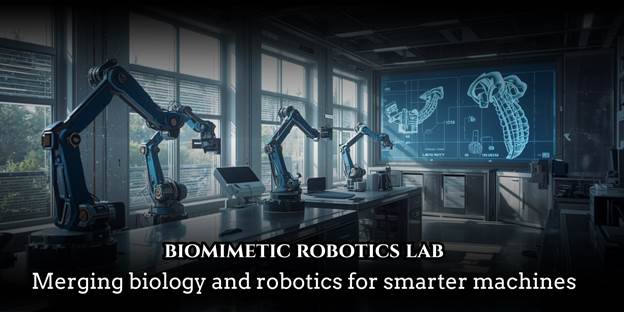
The Biomimetic Robotics Lab is a hub where technology meets biology to design machines that mirror the behavior, motion, and intelligence of living organisms. Biomimetic robotics refers to the creation of robots inspired by nature’s evolutionary solutions. These robots replicate biological systems like animal movement, insect navigation, or plant adaptability, allowing engineers to solve real-world problems through bioinspired design. This interdisciplinary approach combines mechanical engineering, computer science, and neuroscience, forming the backbone of modern robotics research.
The Origin and Evolution of Biomimetic Robotics
The idea of imitating nature to build machines is not new. Centuries ago, inventors studied the flight of birds to design early flying machines. However, the true birth of biomimetic robotics began in the late 20th century when scientists started using artificial intelligence and advanced materials to mimic natural motion and sensory perception.
Early examples include robotic fish developed to study aquatic locomotion and robotic insects designed for surveillance and exploration. With advancements in soft robotics and sensor technology, today’s biomimetic robots have achieved remarkable agility and precision, closely resembling biological entities.
Importance of Biomimetic Robotics
Biomimetic robotics lab plays a crucial role in bridging the gap between artificial systems and living organisms.
Its importance lies in:
- Innovation through Nature’s Design – Nature has spent millions of years perfecting efficiency. Mimicking these systems helps engineers build robots that perform tasks more effectively.
- Enhanced Mobility and Adaptability – Robots inspired by animals or insects can navigate rough terrain, deep oceans, or narrow spaces.
- Sustainability and Efficiency – Natural mechanisms often use minimal energy, promoting eco-friendly technology.
- Cross-disciplinary Collaboration – It integrates biology, robotics, and data science for innovative solutions in healthcare, defense, and industry.
Benefits of Biomimetic Robotics
1. Improved Efficiency and Energy Conservation
Biomimetic robotics lab modeled on animals or plants, often consume less energy while performing complex tasks. This efficiency leads to longer operational life and reduced maintenance costs.
2. Enhanced Flexibility and Dexterity
Inspired by human muscles or octopus tentacles, these robots have flexible structures that can adapt to delicate or uneven environments. This feature is particularly valuable in medical robotics and industrial automation.
3. Realistic Motion and Precision
By mimicking natural movement patterns, biomimetic robots achieve smoother and more precise motion, ideal for surgical operations, space exploration, and search-and-rescue missions.
4. Innovation in Material Science
The study of natural surfaces, such as the gecko’s sticky feet or lotus leaf’s waterproof texture, inspires the creation of smart materials with unique properties.
Challenges in Biomimetic Robotics
While the progress is impressive, developing biomimetic robots is not without obstacles.
1. Complex Biological Systems
Nature’s systems are intricate and not fully understood. Replicating them requires deep knowledge of biomechanics and neural control.
2. High Research and Development Costs
The Biomimetic Robotics Lab requires advanced tools, skilled professionals, and expensive testing environments, making the process resource-intensive.
3. Integration of AI and Sensing
Developing robots that can think and respond like living organisms demands cutting-edge machine learning algorithmsand sensor integration.
4. Ethical and Practical Concerns
Some critics question whether mimicking living beings too closely blurs ethical boundaries, especially in human-robot interaction.
Real-World Examples of Biomimetic Robotics
1. Boston Dynamics’ Spot
Inspired by dogs, Spot is a four-legged robot capable of walking, running, and climbing. It’s used in construction, security, and rescue operations.
2. RoboBee
Developed by Harvard researchers, RoboBee imitates the flight of a bee for pollination and surveillance purposes.
3. Octobot
A soft robot inspired by the octopus, Octobot can move and manipulate objects with flexible tentacles, ideal for underwater exploration.
4. Bionic Bird
This flying robot replicates the natural flight of birds and serves as an educational and surveillance tool.
5. Festo’s Bionic Robots
Festo has developed robots like the BionicCobot and AquaJelly, inspired by jellyfish and human limbs, showcasing the perfect blend of automation and nature-inspired design.
Applications Across Industries
Healthcare and Surgery
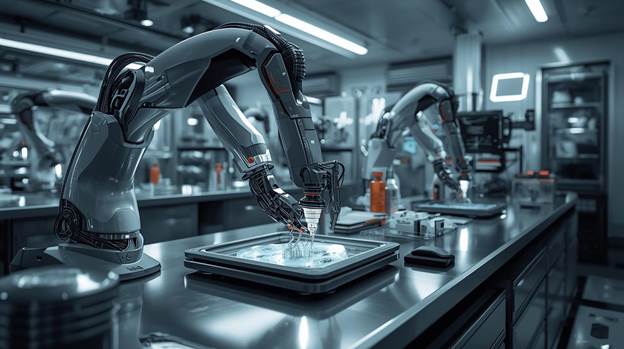
Biomimetic robotics lab assist doctors with precision surgeries, rehabilitation, and prosthetic designs. For instance, robotic arms inspired by human anatomy perform minimally invasive procedures with exceptional accuracy.
Environmental Monitoring
Biomimetic robotics lab inspired by fish and insects explore deep oceans, monitor pollution, and collect data from sensitive ecosystems.
Space and Defense Exploration
NASA and defense organizations use biomimetic robots to explore hazardous terrains where humans cannot go, improving safety and mission success rates.
Industrial Automation
Factories employ flexible robots inspired by snakes or spiders for assembly lines, inspections, and maintenance tasks.
The Future of Biomimetic Robotics
The Biomimetic Robotics Lab continues to evolve with innovations in nanotechnology, AI-driven control, and 3D printing. Future robots may not only imitate living beings but also self-repair, learn, and adapt like biological organisms. As researchers draw deeper insights from nature, biomimetic robotics will revolutionize industries, making technology more sustainable, efficient, and human-centered.
In the coming decades, we can expect these robots to become vital companions in exploration, medicine, and daily life proving that the smartest way forward is often found by looking back to nature.
Conclusion
The Biomimetic Robotics Lab represents the fusion of technology and biology, driving innovation through nature’s wisdom. By studying how living organisms move, sense, and adapt, researchers create robots that are smarter, more efficient, and environmentally conscious. From healthcare to exploration, the impact of biomimetic robotics continues to expand across industries. As this field grows, staying informed about new breakthroughs can inspire future solutions that balance performance with sustainability. Explore further to discover how nature’s designs are shaping the intelligent machines of tomorrow.