
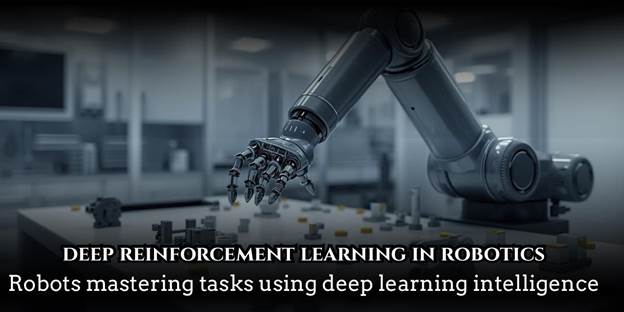
Deep reinforcement learning in robotics is revolutionizing how machines learn, adapt, and interact with the world around them. By combining the principles of artificial intelligence (AI) and machine learning, this cutting-edge approach allows robots to make decisions and improve their performance through experience much like humans do. From autonomous vehicles to robotic arms in manufacturing, these intelligent systems are reshaping industries with smarter, data-driven solutions.
This article explores how deep reinforcement learning empowers robots to achieve autonomous navigation, precise control, and real-time problem-solving. You’ll also discover how this powerful synergy between deep learning and robotics is paving the way for more adaptive, efficient, and intelligent robotic systems that can perform complex tasks with minimal human intervention.
Understanding Deep Reinforcement Learning in Robotics
Deep reinforcement learning in robotics is an advanced field that merges reinforcement learning (RL) and deep learning to train robots through trial and error. In simple terms, it allows robots to learn optimal actions by interacting with their environment and receiving feedback.
Related Article: The Future of Technology with Intelligent Systems
This process mimics human learning patterns, where experiences shape decisions and improve performance over time. By using neural networks, robots can process visual, sensory, and motion data, enabling them to make intelligent choices in dynamic and unpredictable settings.
Background and Evolution
The concept of reinforcement learning dates back to the 1950s, inspired by behavioral psychology and reward-based learning in humans and animals. With the rise of deep neural networks, RL evolved into deep reinforcement learning (DRL), creating a powerful framework for decision-making in robotics. Early applications were limited by computational constraints, but recent advances in AI algorithms, GPU processing, and data availability have made DRL practical and scalable for real-world robotic systems.
Today, leading companies like Boston Dynamics, NVIDIA, and Google DeepMind use DRL to develop robots that can walk, grasp objects, and navigate challenging terrains autonomously.
Related Article: Autonomous Systems: Shaping the Future of Technology and Society
Importance in Modern Robotics
The integration of deep reinforcement learning into robotics is crucial for creating intelligent autonomous systems capable of independent operation. Traditional robots rely on pre-programmed instructions and struggle with unfamiliar environments. In contrast, DRL-based robots can:
- Learn continuously from real-world interactions.
- Adapt to new situations without human reprogramming.
- Optimize performance over time using feedback loops.
This adaptability is essential in fields like healthcare robotics, autonomous vehicles, industrial automation, and service robotics, where unpredictability is common.
Key Benefits of Deep Reinforcement Learning in Robotics
1. Enhanced Learning and Adaptation
DRL enables robots to improve through experiential learning rather than static programming. By receiving rewards for correct actions, they can identify the best strategies for complex tasks such as object manipulation or obstacle avoidance.
2. Reduced Human Intervention
Because DRL robots learn autonomously, they reduce dependency on human operators. This not only saves time but also minimizes errors in critical applications like surgical robotics and space exploration.
3. Real-Time Decision Making
With the help of deep neural networks, robots can analyze real-time data and make fast, informed decisions. This capability is vital for applications involving autonomous navigation, drone control, or self-driving vehicles.
4. Scalability and Versatility
Once trained, a DRL model can be applied across multiple robotic platforms. This means a single trained algorithm can control different robots, improving scalability and lowering development costs.
Major Challenges in Implementing DRL
Despite its advantages, there are several challenges that limit the widespread adoption of DRL in robotics:
1. Data and Training Requirements
DRL requires extensive data and computational power for training. Robots often need millions of interactions to learn a single task efficiently. Simulated environments help speed this process but can’t always capture real-world complexity.
2. Safety and Reliability Concerns
During training, robots may perform unpredictable actions that could cause damage or safety hazards. Ensuring safe reinforcement learning is critical, especially in human-robot interaction environments.
3. Transfer Learning Issues
Deep reinforcement learning in robotics Knowledge gained in one environment does not always transfer well to another. This makes it difficult for DRL-trained robots to generalize across new settings.
4. High Computational Costs
Deep reinforcement learning in robotics involves heavy computation and large-scale processing. This makes it expensive to deploy in resource-limited environments or smaller organizations.
Real-World Applications and Examples
1. Industrial Robotics
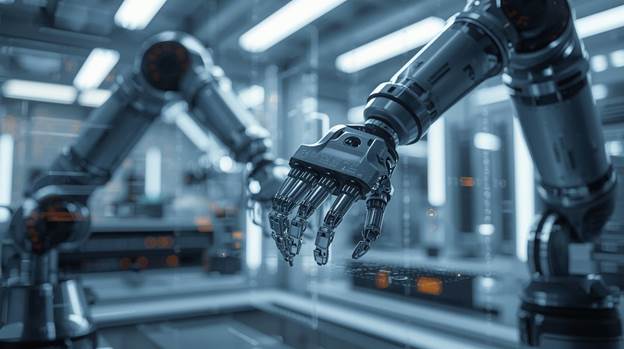
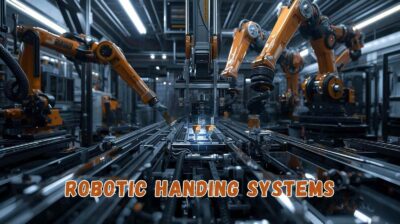
Factories use DRL to improve robotic automation in assembly lines. Robots can learn to handle variable parts, improve accuracy, and optimize workflow through continuous feedback.
2. Healthcare Robotics
In healthcare, DRL enables robot-assisted surgery and patient care automation. Robots can learn delicate movements for precision-based procedures and adapt to different patient conditions.
3. Autonomous Vehicles and Drones
Self-driving cars and aerial drones rely heavily on DRL for path planning, obstacle avoidance, and decision-making. By continuously learning from sensor data, these systems can enhance safety and efficiency.
4. Service and Companion Robots
Home assistants and AI-powered service robots benefit from DRL through improved navigation and human interaction capabilities. They can learn user preferences and provide customized support over time.
The Future of DRL in Robotics
The future of deep reinforcement learning in robotics looks promising as research focuses on improving efficiency, safety, and scalability.
Emerging trends include:
- Sim-to-Real Transfer Learning to bridge the gap between virtual training and real-world performance.
- Hybrid AI Models combining symbolic reasoning with DRL for more interpretability.
- Collaborative Learning Robots that share experiences to accelerate group learning.
As AI technology evolves, DRL will continue to enhance robotic autonomy, enabling machines to perform complex, real-world tasks with human-like intelligence and adaptability.
Conclusion
In summary, deep reinforcement learning in robotics is transforming the way machines learn and interact with their surroundings. By combining advanced algorithms with intelligent decision-making, robots can now adapt, optimize, and operate autonomously across industries. This innovation not only enhances efficiency but also opens new frontiers in autonomous systems and intelligent automation. As research continues to evolve, staying informed about the latest advancements in deep reinforcement learning in robotics will be key to understanding the future of smart, adaptive, and self-learning robotic technologies.
1 Comment
Add Yours →[…] Related Article: Deep Reinforcement Learning in Robotics: Enabling Intelligent Autonomous Systems […]