Social awareness activities for elementary students play a key role in helping children learn how to interact kindly, understand emotions, and build positive relationships with others. These activities support the development of important life skills such as empathy, community involvement, and communication skills, which influence a child’s behavior both in and outside the classroom. By introducing simple, interactive lessons and group tasks, teachers and parents can guide students to become more thoughtful and socially responsible.
This article will explore creative and effective classroom ideas, games, role-play tasks, and collaborative projects that promote emotional understanding and respectful behavior. Whether used at school or home, these activities help young learners grow into compassionate individuals who contribute positively to their community.
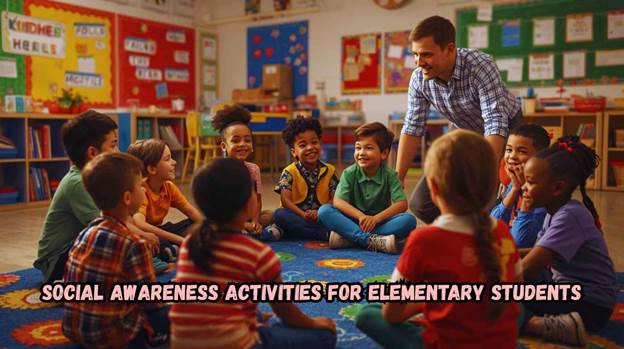
Understanding Social Awareness Activities for Elementary Students
Social awareness activities for elementary students help young learners understand how to interact, communicate, and respond to the feelings and viewpoints of others. These activities encourage students to become more thoughtful, cooperative, and responsible in both classroom and everyday life settings. They guide children to look beyond themselves and recognize that others have their own emotions, needs, and experiences. When this understanding is nurtured from an early age, students develop meaningful friendships, show respect in communication, and contribute positively to group environments.
What is Social Awareness?
Social awareness involves recognizing the emotions and perspectives of others and responding thoughtfully. It is an important part of emotional intelligence and helps children understand how their actions influence others around them. When students develop social awareness, they learn to cooperate more easily and communicate clearly.
Key Elements of Social Awareness
- Empathy
- Respect for diversity
- Active listening
- Cooperation and teamwork
These components form the foundation of positive social behavior and help create harmonious classroom communities.
Importance of Social Awareness Activities for Elementary Students
Introducing social awareness activities in the early years supports both emotional and intellectual development. When children understand how to interact considerately, learning becomes smoother and more enjoyable for everyone.
Emotional Development and Relationship Building
Social awareness allows children to identify their own feelings and talk about them. It also teaches them to understand others’ expressions and respond gently. This reduces misunderstandings and classroom conflicts.
Benefits for Emotional Growth
- Improved communication skills
- Greater confidence in expressing feelings
- Stronger friendships and peer relationships
- Increased classroom participation
Children with strong social awareness often feel more secure and supported, which leads to better attention and focus during lessons.
How Social Awareness Supports Academic Learning
Although it may seem unrelated to academic subjects, social awareness plays a key role in learning success.
Influence on Classroom Behavior
Students who understand others and collaborate effectively are more likely to participate in group work, follow instructions, and maintain respect during discussions.
Academic and Behavioral Benefits
- Encourages positive classroom culture
- Enhances teamwork skills
- Improves concentration and cooperation
- Develops leadership qualities
A classroom built on mutual respect becomes more productive and calm, allowing meaningful learning to take place.
Benefits of Social Awareness Activities
These activities encourage emotional strength and behavioral growth.
Key Advantages Beyond the Classroom
The skills learned throughsocial awareness activitiesextend to life beyond school. Children begin to show thoughtful behavior at home, in community spaces, and in friendships.
Important Long-Term Benefits
- Better ability to resolve conflicts peacefully
- Strong sense of community involvement
- Increased willingness to help others
- Development of patience and understanding
These qualities prepare children to become caring and responsible members of society.
Types of Social Awareness Activities
Social awareness can be taught through varied, enjoyable, and interactive methods. These activities can be easily included in regular teaching plans.
Games That Build Emotional Understanding
Games are engaging and help children learn naturally.
Emotion Identification Cards
Students draw cards showing faces expressing different emotions. The group identifies the emotion and discusses a situation that may cause that feeling. This builds emotional recognition.
Perspective Role Play
Students act out short stories or real-life situations from different viewpoints. This helps them understand how others feel and think.
Group Discussions and Story Sharing
Encouraging communication allows students to connect experiences.
Sharing Circle
Students sit in a circle and share experiences while others listen without interrupting. They learn patience and respectful communication.
Collaborative Classroom Projects
Working together teaches cooperation and responsibility.
Classroom Helper System
Assigning rotating roles such as material organizer or board cleaner helps students understand responsibility and teamwork.

Challenges in Developing Social Awareness
Although essential, building social awareness may come with challenges.
Diverse Backgrounds and Personalities
Students come from different family environments and may express emotions differently. Some students may need additional time to understand social cues.
Helpful Approaches for Teachers
- Give consistent praise for positive behavior
- Model respectful communication
- Use clear language to explain feelings and responses
- Encourage peer support rather than competition
Patience and repetition are key.
How Teachers and Parents Can Support Learning
Social awareness grows best when supported both at school and home.
Teacher’s Role in School
Teachers shape classroom behavior through consistent expectations and modeling respectful language.
Techniques for Teachers
- Incorporate group discussions and teamwork
- Encourage reflective thinking through journaling or storytelling
- Use classroom charts displaying emotional vocabulary
- Guide students to solve conflicts independently with gentle support
Parent’s Role at Home
Parents can reinforce social awareness through daily interactions and shared conversations.
Home-Based Support Practices
- Ask children how they feel each day
- Read stories that highlight empathy and talk about characters
- Encourage sharing and taking turns during playtime
- Do simple chores together as a team
When both school and home environments emphasize empathy and communication, children develop stronger emotional skills.
Examples of Daily Social Awareness Practices
Applying simple routines strengthens learning outcomes.
- Morning greeting activities
- Shared storytelling time
- Group art or building projects
- Partner reading and discussion
- Classroom clean-up teams
- Reflection journals where students write about feelings
These practices help students learn gently and consistently.
Conclusion
In summary, social awareness activities for elementary students play an important role in helping young learners build empathy, communicate kindly, and work well with others. These activities encourage students to recognize emotions, understand different perspectives, and form positive relationships in school and beyond. By practicing teamwork, respect, and thoughtful communication, children develop valuable life skills that support both academic success and personal growth. To continue fostering a supportive environment, teachers and parents can explore more engaging social awareness activities for elementary students and make them a regular part of learning.