
Robotic medical devices are transforming the way healthcare professionals diagnose, operate, and treat patients with greater precision and safety. In today’s digital healthcare landscape, these intelligent machines combine advanced automation, artificial intelligence (AI), and cutting-edge surgical robotics to enhance both the accuracy and efficiency of medical procedures. From minimally invasive surgeries to remote-assisted operations, robotics is reshaping the patient experience by reducing recovery time and improving overall outcomes.
Related Article: The Future of Healthcare with Robotics Surgery
This article explores the evolution, importance, and real-world applications of robotic technology in modern medicine. It also highlights the key benefits, challenges, and future potential of these innovations in revolutionizing healthcare systems worldwide. Through this insight, readers will understand how robotic advancements are setting new standards in surgical excellence and patient care.
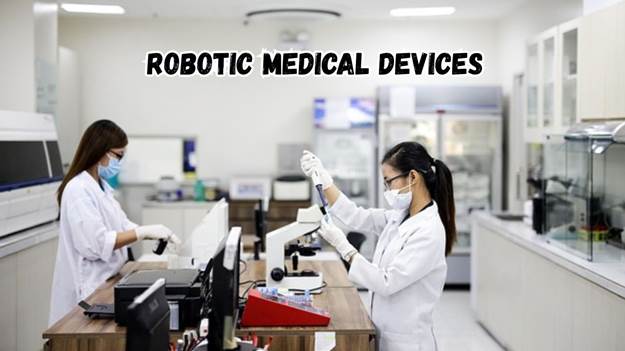
Understanding Robotic Medical Devices and Their Growing Role in Modern Healthcare
Definition and Overview of Robotic Medical Devices
Robotic medical devices are advanced machines designed to assist doctors and surgeons in performing complex medical procedures with precision, control, and flexibility. These devices integrate automation technology, artificial intelligence (AI), and robotic surgery systems to enhance the capabilities of healthcare professionals. They are used in various medical fields including neurology, orthopedics, cardiology, and urology, enabling minimally invasive treatments that were once difficult or impossible to achieve manually.
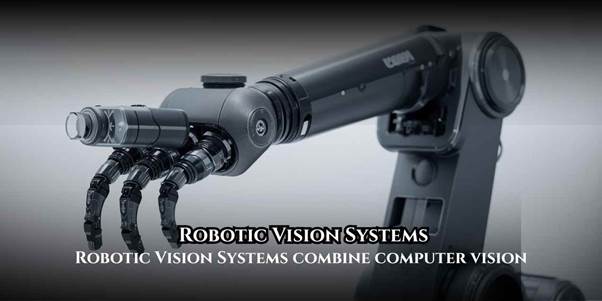
These smart systems often feature robotic arms, cameras, and control interfaces that allow surgeons to perform intricate procedures through tiny incisions, reducing the risk of human error. Their growing role in hospitals and clinics represents a significant step forward in the evolution of digital healthcare.
Background and Evolution of Robotic Medical Devices
Historical Development
The journey of robotic technology in healthcare began in the late 20th century. Early systems were developed to improve surgical precision and reduce surgeon fatigue. One of the first major breakthroughs was the PUMA 560, a robotic arm used in 1985 to perform a neurosurgical biopsy with remarkable accuracy.
In the 1990s, advancements led to the creation of more sophisticated systems such as the da Vinci Surgical System, which became a global standard for robotic-assisted surgeries. Over the years, these devices have evolved with the integration of AI, real-time imaging, and machine learning capabilities, making them more efficient and adaptable to a variety of procedures.
Today, robotic medical systems are not limited to surgeries they are also used in rehabilitation robotics, patient monitoring, and drug delivery, marking a new era of intelligent healthcare solutions.
Importance of Robotic Medical Devices in Healthcare
Enhancing Accuracy and Consistency
One of the main reasons Automated medical systems have gained importance is their unmatched accuracy. Unlike traditional methods, these systems can perform delicate operations with steady precision, minimizing risks during critical surgeries.
Improving Patient Outcomes
By enabling smaller incisions, reducing blood loss, and promoting faster recovery, robotic-assisted surgeries lead to improved patient outcomes and shorter hospital stays. Patients also experience less post-operative pain, which enhances overall satisfaction and trust in modern healthcare systems.
Supporting Medical Professionals
Robotics also play a crucial role in reducing the physical and mental strain on healthcare providers. Surgeons can operate for longer periods without fatigue, while the technology provides real-time data and visual feedback to support decision-making.
Key Benefits of Robotic Medical Devices
1. Precision and Control
- Enable millimeter-level accuracy during complex surgeries
- Reduce the likelihood of surgical errors
- Offer stable control in minimally invasive operations
2. Reduced Recovery Time
- Smaller incisions and less tissue damage mean quicker healing
- Lower risk of infections and complications
- Patients can return to normal activities sooner
3. Improved Visualization
- High-definition 3D imaging provides a clearer view of internal organs
- Allows surgeons to navigate complex structures safely
4. Enhanced Training Opportunities
- Simulated environments help medical students practice safely
- Real-time data and feedback improve learning outcomes
Challenges and Limitations of Robotic Medical Devices
Despite their advantages, the adoption of robotic medical devices faces several challenges that limit their widespread use.
High Costs
The initial cost of purchasing and maintaining robotic systems can be extremely high, making them inaccessible for smaller hospitals or developing regions. Additionally, disposable instruments and software updates add to long-term expenses.
Training Requirements
Operating robotic devices requires specialized training. Surgeons must develop new technical skills to manage robotic arms and digital interfaces effectively. This can slow down adoption in certain healthcare settings.
Technical Errors and System Failures
Although rare, robotic systems can experience malfunctions, such as software glitches or mechanical failures, which may pose risks during surgery. Continuous monitoring and maintenance are essential to avoid such issues.
Ethical and Legal Concerns
As robotics and AI play a larger role in patient care, questions about accountability, data privacy, and consent continue to emerge. Healthcare institutions must establish clear guidelines for safe and ethical use.
Examples and Real-World Applications
Surgical Robotics
- The da Vinci Surgical System is widely used in urology, gynecology, and cardiac surgery, allowing surgeons to operate through tiny incisions with enhanced precision.
- MAKO SmartRobotics assists in orthopedic procedures like knee and hip replacements, ensuring better alignment and long-term success.
Rehabilitation Robotics
- Devices like the Lokomat help patients regain mobility after spinal cord injuries or strokes through guided and repetitive motion therapy.
Telepresence and Remote Surgery
- Surgeons can perform operations remotely using robotic systems connected via high-speed networks, enabling access to advanced care in remote or underserved areas.
Robotic Imaging and Diagnostics
- AI-powered robotic scanners and ultrasound devices can autonomously detect abnormalities, improving early diagnosis and treatment accuracy.
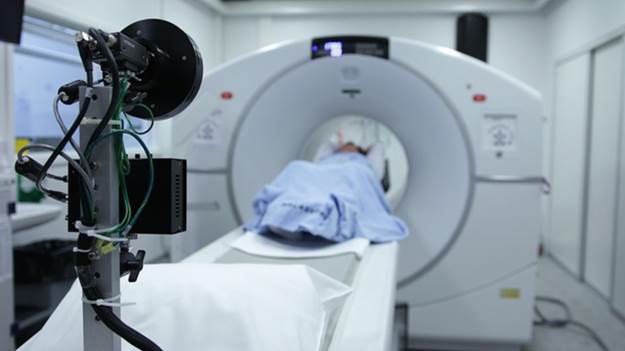
Future of Robotic Medical Devices in Global Healthcare
As technology continues to evolve, robotic medical devices will become more affordable, compact, and intelligent. Integration with machine learning, 5G connectivity, and cloud computing will allow real-time data sharing and predictive analysis.
The future promises collaborative robots, or cobots, that will work alongside healthcare professionals, enhancing human expertise rather than replacing it. These innovations will not only redefine surgical precision but also make quality healthcare accessible to more people worldwide.
In conclusion, Medical automation technology represent a revolutionary advancement in modern medicine bridging the gap between human skill and machine intelligence to deliver safer, faster, and more reliable patient care.
Conclusion
In conclusion, AI-powered medical systems are transforming healthcare by combining automation technology, AI-driven precision, and enhanced surgical control. They have revolutionized how surgeries are performed, improving accuracy, reducing recovery time, and elevating patient care standards. Despite challenges such as high costs and training needs, their long-term benefits far outweigh the limitations. As innovation continues, these advanced systems will play an even greater role in shaping the future of modern medicine. To stay informed about emerging robotic healthcare technologies, explore the latest updates and breakthroughs in medical robotics.
2 Comments
Add Yours →[…] Related Article: Robotic Medical Devices: Revolutionizing Surgery and Patient Care in the Modern Era […]
[…] Related Article: Robotic Medical Devices: Revolutionizing Surgery and Patient Care in the Modern Era […]