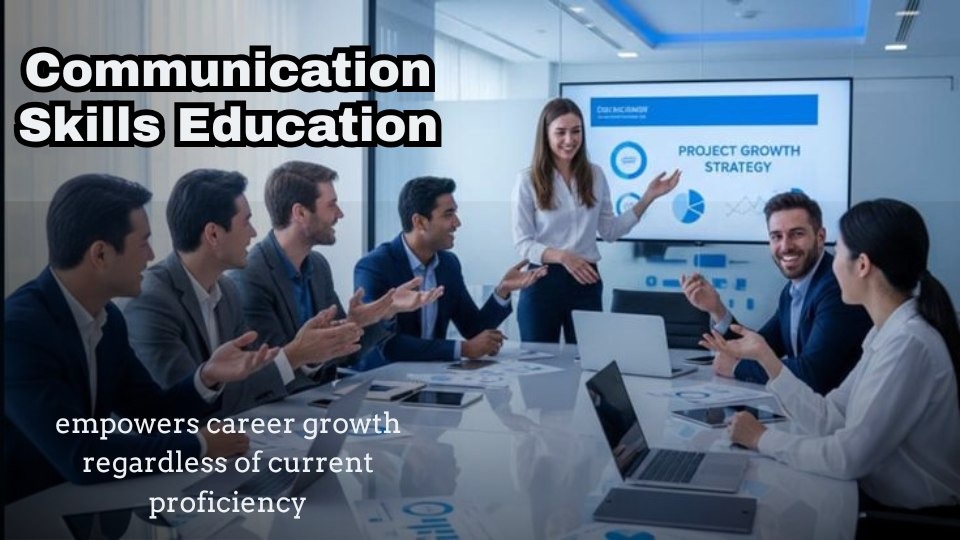
Communication skills education is the structured process of teaching individuals how to express ideas clearly, listen actively, and engage meaningfully in personal and professional settings. If you have ever wondered whether communication can actually be taught or improved through formal learning, the short answer is yes and research strongly backs this up.
This guide breaks down everything you need to know, from what this field of education actually covers to how you can apply it at school, work, or in everyday life.
Table of Contents
What Is Communication Skills Education?
Communication skills education refers to any intentional learning experience designed to improve how people send and receive messages. This includes verbal communication, nonverbal cues, written expression, active listening, and interpersonal dynamics.
It is not limited to public speaking. It covers a wide topical range including:
- Verbal and nonverbal communication
- Written and digital communication
- Listening and comprehension skills
- Conflict resolution and negotiation
- Presentation and public speaking
- Intercultural and cross-cultural communication
- Emotional intelligence in communication
- Professional and workplace communication
- Communication skills for children and early development
- Communication in healthcare, law, and leadership contexts
Why Communication Skills Education Matters
Poor communication is one of the leading causes of workplace failure, relationship breakdowns, and academic underperformance. According to research published by the National Association of Colleges and Employers (NACE), oral and written communication consistently rank among the top skills employers seek in new graduates.
A LinkedIn Workforce Report also identified communication as the single most in-demand soft skill across industries globally.
The gap between how well people think they communicate and how well they actually do is significant. Structured education helps close that gap with measurable, lasting results.
Core Components of Communication Skills Education
1. Verbal Communication Training
This focuses on how you choose words, vary tone, and structure spoken messages. Learners practice clarity, conciseness, and confidence in real-time conversations and presentations.
Strong verbal skills reduce misunderstandings and help people make stronger first impressions.
2. Active Listening Development
Most people hear words. Fewer actually listen with full attention and intent. Active listening education teaches techniques such as paraphrasing, asking clarifying questions, and resisting the urge to interrupt.
According to the International Listening Association, studies suggest that people retain only about 25 to 50 percent of what they hear without deliberate listening practice.
3. Nonverbal Communication Awareness
Body language, eye contact, facial expressions, and posture all carry meaning. Research by Albert Mehrabian, Professor Emeritus of Psychology at UCLA, found that a significant portion of emotional meaning in face-to-face communication is conveyed through nonverbal signals rather than words alone.
Education in this area helps learners align what they say with how they appear, building trust and credibility.
4. Written Communication Skills
From emails to reports to social media, written communication is everywhere. This component covers grammar, tone, structure, and audience awareness across different writing formats.
Clear writing is a direct reflection of clear thinking.
5. Digital and Virtual Communication
Remote work and online learning have made digital communication a standalone skill. Learners are now taught how to communicate effectively over video calls, through messaging platforms, and in professional emails.
This is a rapidly growing area within communication skills education due to the permanent shift toward hybrid work environments.
Who Needs Communication Skills Education?
The honest answer is everyone, at every stage of life.
| Group | Primary Communication Need |
| School Students | Classroom participation, writing, peer communication |
| College Students | Presentations, group work, professional readiness |
| Working Professionals | Leadership, team communication, client interaction |
| Managers and Executives | Persuasion, conflict resolution, strategic messaging |
| Entrepreneurs | Pitching, networking, brand communication |
| Young Children | Language development, social expression, listening |
| Individuals | Personal relationships, social confidence, self-expression |
How Communication Skills Are Taught
Formal Education Settings
Schools and universities offer dedicated courses in speech communication, rhetoric, business communication, and English composition. These structured environments provide feedback, grading, and peer comparison.
Many institutions now integrate communication modules across all disciplines rather than limiting them to humanities or arts programs.
Workshops and Professional Development Programs
Corporate training programs often focus on targeted skills such as negotiation, presentation delivery, or difficult conversations. These short-format programs can produce measurable improvement in a short time when designed well.
Online Learning Platforms for Communication Skills Education
Digital learning has made communication training more accessible than ever before. Platforms such as Coursera, LinkedIn Learning, and edX now offer structured courses in business communication, public speaking, interpersonal skills, and professional writing from accredited universities and industry experts.
A 2023 report by Global Market Insights estimated that the online soft skills training market, which includes communication education, was valued at over 13 billion dollars and continues to grow steadily year over year.
Some strong platforms to explore include:
- Coursera : University-backed communication and business writing courses
- LinkedIn Learning : Short professional development modules for workplace communication
- Toastmasters International : A globally recognised organisation for public speaking and leadership communication
- edX : Academic courses from institutions like MIT and Harvard covering rhetoric and professional communication
- Udemy : Affordable, practical courses on presentation skills and verbal delivery
The Role of Emotional Intelligence in Communication Education
Emotional intelligence (EQ) and communication are deeply connected. A person can know all the right words and still fail to connect if they cannot read the emotional tone of a conversation or regulate their own reactions under pressure.
According to research by TalentSmart, emotional intelligence accounts for roughly 58 percent of performance across all types of jobs. High EQ individuals communicate with greater empathy, handle conflict more effectively, and build stronger relationships over time.
Modern communication skills education increasingly integrates EQ training through:
- Empathy mapping exercises
- Scenario-based role play in high-pressure situations
- Feedback loops that highlight emotional blind spots
- Reflective journaling to build self-awareness
Teaching communication without addressing emotional intelligence is like teaching someone to drive without covering road awareness. Both dimensions are absolutely necessary.

Communication Skills Education for Children and Early Learners
Building strong communication skills starts far earlier than most people realise. Research published by the American Academy of Pediatrics confirms that language development in children begins in the first year of life, long before formal schooling starts.
Early communication education lays the foundation for reading ability, social confidence, conflict resolution, and academic performance throughout a child’s life.
How Communication Is Taught to Young Learners
Educators and parents use several evidence-based approaches to build communication skills in children:
- Storytelling and read-aloud sessions: These build vocabulary, comprehension, and the ability to structure ideas in sequence
- Show-and-tell activities: Children practise organising thoughts and presenting them to an audience in a low-pressure setting
- Role play and drama: Encourages perspective-taking, emotional expression, and social awareness
- Structured group discussions: Teaches turn-taking, active listening, and respectful disagreement from an early age
The National Literacy Trust in the United Kingdom has consistently found that children who receive early communication skills education perform significantly better in reading, writing, and peer relationships throughout primary and secondary school.
Why Parents Play a Critical Role
Parents and caregivers are a child’s first communication teachers. Research from the Harvard Center on the Developing Child shows that back-and-forth conversations between caregivers and young children, often called serve-and-return interactions, are among the most powerful drivers of language and communication development.
Simple daily habits like asking open-ended questions, narrating everyday tasks, and reading aloud together create a rich communication environment that no classroom programme can fully replicate.
Communication Skills in the Workplace
Workplace communication is one of the most studied and most urgently needed areas within communication skills education. A report by the Economist Intelligence Unit found that poor workplace communication directly contributes to project failures, missed deadlines, low employee morale, and significant financial losses for organisations.
Effective workplace communication goes beyond giving clear instructions. It includes the ability to give and receive constructive feedback, navigate difficult conversations with professionalism, lead meetings efficiently, write clear reports and proposals, and adapt communication style to different stakeholders.
Key Workplace Communication Skills
The most impactful skills in a professional context include:
- Upward communication: Speaking clearly and confidently to managers and leadership
- Downward communication: Giving direction and feedback to teams in a way that motivates rather than demoralises
- Lateral communication: Collaborating effectively with peers and cross-functional teams
- Client-facing communication: Building trust, managing expectations, and resolving issues professionally
- Written business communication: Emails, reports, proposals, and internal memos that are clear and concise
According to a study published by Grammarly and the Harris Poll, businesses in the United States lose an estimated 1.2 trillion dollars annually due to ineffective communication among employees. Investing in communication skills education is not a soft benefit. It is a hard business return.
Communication Skills and Leadership
Leadership effectiveness is almost entirely dependent on communication quality. The Centre for Creative Leadership has consistently found that the ability to communicate a clear vision, listen with empathy, and deliver honest feedback are the three communication competencies most strongly linked to leadership success.
Managers who receive structured communication training show measurable improvements in team engagement, productivity, and retention compared to those who do not.
How to Measure Growth in Communication Skills
One of the biggest challenges in communication education is measuring progress. Unlike mathematics or coding, communication improvement is not always visible in a test score.
Here are practical ways to track development:
- Peer Feedback Sessions: Regular structured feedback from colleagues or classmates reveals blind spots that self-assessment often misses
- Recorded Presentations: Reviewing recordings of yourself speaking helps identify filler words, pacing issues, and body language patterns
- 360-Degree Assessments: Used widely in corporate settings, these gather feedback from supervisors, peers, and direct reports on communication effectiveness
- Writing Portfolio Reviews: Comparing written samples over time shows growth in clarity, tone, and structure
- Self-Reflection Journals: Tracking communication experiences and outcomes builds metacognitive awareness over time
Progress in communication is cumulative. Small consistent improvements compound into significant long-term growth.
Common Mistakes in Communication Skills Education
Even well-designed communication programmes fall short when they rely too heavily on theory without practice. Here are the most frequent errors educators and learners both make:
- Focusing only on speaking while ignoring listening and writing
- Treating communication as a one-time course rather than an ongoing practice
- Skipping feedback mechanisms that reveal real gaps in skill
- Teaching generic scripts instead of adaptable frameworks
- Ignoring cultural context and how communication norms vary across communities
- Neglecting digital communication as a separate and important skill set
The most effective communication education programmes balance theory with repetition, reflection, and real-world application.
A Step by Step Personal Communication Development Roadmap
You do not need to enrol in a formal degree to build strong communication skills. Here is a practical roadmap anyone can follow:
Step 1: Assess Your Current Skills Identify your strengths and weaknesses across verbal, written, listening, and nonverbal communication. Use free self-assessment tools or ask for honest feedback from someone you trust.
Step 2: Set Specific Goals Rather than saying you want to communicate better, define exactly what that means. For example, aim to speak more confidently in team meetings or improve the clarity of your professional emails within 60 days.
Step 3: Learn Deliberately Choose one resource, course, or skill area at a time. Depth beats breadth when building communication competency.
Step 4: Practice in Real Contexts Apply new skills immediately in real situations. Join a local speaking club, volunteer to lead a meeting, or write a professional article. Practice without feedback loops creates bad habits.
Step 5: Seek Feedback Consistently Feedback is the accelerant of skill development. Build a habit of asking for specific and constructive input after important communication moments.
Step 6: Review and Adjust Revisit your goals every 30 to 60 days. Identify what is working and where you still need to focus energy.
Conclusion
Communication skills education is not a luxury or a nice-to-have addition to academic or professional life. It is one of the highest-return investments a person can make in themselves. Whether you are a student preparing to enter the workforce, a manager trying to lead more effectively, a parent supporting a child’s language development, or someone simply wanting to connect better with the people around you, deliberate communication education creates lasting change.
The field spans a wide topical range including verbal fluency, emotional intelligence, digital communication, active listening, nonverbal awareness, intercultural understanding, early childhood language development, workplace communication, and written clarity. No single course will cover everything, but a consistent commitment to growth across these areas builds the kind of communicator others trust and follow.
Start with one area, practice it with intention, seek honest feedback, and keep building from there. The results will show up in your relationships, your career, and your confidence.
Found this guide useful? Share it with someone who could benefit, leave a comment below with your biggest communication challenge, or try one tip from the roadmap today and see what shifts.
Frequently Asked Questions
What is the meaning of communication skills education? Communication skills education is a structured approach to teaching individuals how to express ideas clearly, listen attentively, and engage effectively across verbal, written, and nonverbal formats. It is applied in schools, universities, workplaces, and online learning environments to develop both personal and professional communication competency.
Why are communication skills important in education? Strong communication skills help students perform better academically, collaborate more effectively with peers, and prepare for professional environments where clear expression and interpersonal understanding are essential. Research by the National Association of Colleges and Employers consistently places communication at the top of skills employers seek in graduates.
Can communication skills be taught or are they natural? While some individuals may have natural tendencies toward extroversion or verbal fluency, communication is fundamentally a learnable skill. Studies in educational psychology confirm that structured training, deliberate practice, and consistent feedback lead to measurable improvement in communication ability across all age groups.
What are the most important communication skills to learn? The most impactful communication skills to develop include active listening, clear verbal expression, professional writing, nonverbal awareness, empathy-based interaction, and the ability to adapt your communication style to different audiences and contexts.
How long does it take to improve communication skills? Meaningful improvement in communication skills typically becomes noticeable within 30 to 90 days of consistent focused practice. However, mastery is an ongoing process. According to learning science research, skills practiced regularly in real-world contexts develop far faster than those studied only in classroom settings.
What careers benefit most from communication skills education? Almost every career benefits from strong communication, but fields such as education, healthcare, law, business management, marketing, journalism, counselling, and leadership roles see the most direct and measurable impact from formal communication skills training.