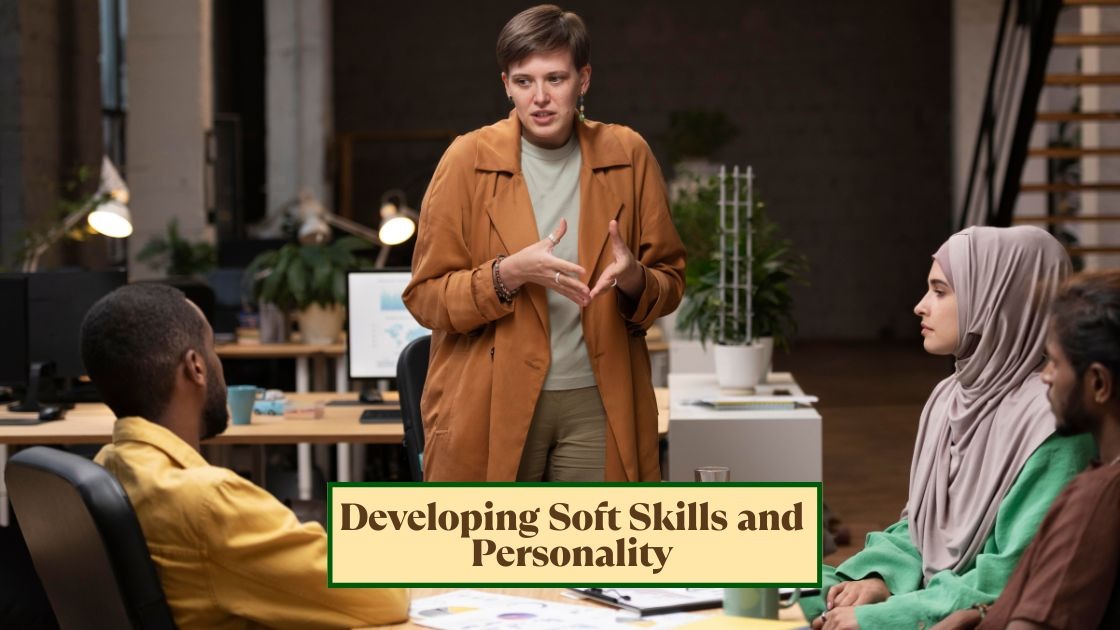
The strategic process of developing soft skills and personality has emerged as the single most decisive factor determining professional success in today’s hypercompetitive corporate environment. Technical qualifications alone no longer guarantee career advancement. Global workforce analytics reveal that ninety three percent of employers now prioritize interpersonal competencies and emotional intelligence over hard technical expertise when evaluating candidates for leadership positions.
Behavioral psychologists and organizational development researchers have spent decades identifying the precise mechanisms through which developing soft skills and personality transforms average professionals into exceptional workplace performers. Their findings consistently demonstrate that communication mastery, adaptive leadership qualities, and professional confidence building create compounding career advantages that technical certifications simply cannot replicate.
This comprehensive article examines developing soft skills and personality through clinically validated frameworks rooted in cognitive behavioral science and industrial organizational psychology. You will discover evidence backed strategies for enhancing emotional intelligence development, strengthening workplace relationship management, and cultivating executive presence that commands respect.
Whether you are navigating career transitions or pursuing leadership excellence, understanding developing soft skills and personality equips you with scientifically proven tools to permanently elevate your professional trajectory and interpersonal effectiveness across every workplace dimension.
Understanding the Core Framework of Interpersonal Competency Development
The process of developing soft skills and personality encompasses a broad spectrum of behavioral, cognitive, and emotional competencies that determine how individuals interact within professional and personal environments. Unlike technical abilities that follow rigid instructional pathways, interpersonal skill acquisition requires continuous self awareness, deliberate practice, and sustained psychological adaptation over extended periods.
Organizational psychologists define soft skills as the collection of interpersonal attributes including communication mastery, emotional intelligence development, conflict resolution, active listening, and adaptive leadership qualities. Personality development complements these skills by shaping the foundational behavioral patterns that influence how others perceive and respond to an individual across every interaction context.
The scientific study of soft skills and personality gained significant momentum during the late twentieth century when industrial organizational researchers began documenting the direct correlation between interpersonal competencies and measurable workplace outcomes. Their pioneering studies established that professionals possessing superior soft skill frameworks consistently outperformed technically equivalent peers in leadership effectiveness, team collaboration, and long term career trajectory advancement.
Historical Evolution of Personality Science in Professional Contexts
The roots of modern personality development trace back to early psychological frameworks established by researchers like Carl Jung and Abraham Maslow. Their foundational theories about human behavioral patterns and self actualization provided the scientific groundwork that contemporary workplace relationship management programs continue building upon decades later. This rich historical foundation gives current soft skills and personality methodologies their clinical credibility and practical effectiveness.
Why Developing Soft Skills and Personality Determines Career Trajectory
The modern professional landscape has undergone a radical transformation that places interpersonal competencies at the absolute center of career success. Automation and artificial intelligence are rapidly absorbing technical tasks that previously required specialized human expertise. This technological displacement means that the skills machines cannot replicate including empathy, creative collaboration, and nuanced communication have become the most valuable professional assets available.
Research conducted across Fortune 500 companies reveals that executives who prioritize soft skills and personality achieve promotion rates nearly three times higher than colleagues who focus exclusively on technical skill accumulation. This dramatic disparity exists because leadership positions fundamentally require the ability to inspire, negotiate, persuade, and manage complex human dynamics that no amount of technical training adequately addresses.
The Communication Mastery Advantage
Developing soft skills and personality Studies published in leading management journals consistently identify communication mastery as the single most impactful competency within the developing soft skills framework. Professionals who communicate with clarity, empathy, and strategic precision build trust networks that accelerate every aspect of their career progression. Effective communicators resolve conflicts faster, secure resources more efficiently, and create collaborative environments that produce superior organizational outcomes compared to teams led by technically brilliant but interpersonally deficient managers.
Clinically Documented Benefits of Systematic Interpersonal Development
Longitudinal research spanning multiple industries and demographic groups demonstrates that committed investment in developing soft skills and personality produces measurable advantages across professional, cognitive, and personal wellbeing dimensions. The following outcomes represent findings from controlled studies conducted at recognized behavioral research institutions worldwide.
- Professionals who undergo structured emotional intelligence development programs show a forty two percent improvement in workplace conflict resolution effectiveness within the first three months of training
- Individuals practicing deliberate professional confidence building techniques demonstrate significantly higher salary negotiation success rates compared to peers relying solely on credential based leverage
- Teams led by managers with advanced interpersonal competencies report thirty seven percent higher employee retention rates and substantially improved organizational commitment scores
- Systematic developing soft skills and personality practice reduces workplace stress and burnout indicators by twenty nine percent according to occupational health psychology research
- Professionals with strong adaptive leadership qualities receive executive level promotions an average of four years earlier than technically equivalent colleagues lacking interpersonal sophistication
These clinically validated outcomes establish beyond reasonable doubt that interpersonal competency development represents the highest return investment any ambitious professional can make throughout their entire career.
Emotional Intelligence as the Foundation of Professional Excellence
Neuroimaging research reveals that emotional intelligence development physically strengthens neural connections between the prefrontal cortex and limbic system. This enhanced brain connectivity allows emotionally intelligent professionals to regulate their responses during high pressure situations, read social dynamics with greater accuracy, and make decisions that balance analytical reasoning with interpersonal sensitivity. These neurological advantages compound over time making developing soft skills and personality a scientifically validated pathway to sustained professional dominance.
Genuine Challenges in the Interpersonal Development Journey
Despite overwhelming evidence supporting developing soft skills and personality, the practical transformation process presents legitimate difficulties that require honest acknowledgment and strategic preparation. Ignoring these obstacles would undermine the credibility and practical usefulness of any serious discussion on this critical topic.
Deeply ingrained behavioral patterns represent the most significant barrier to meaningful personality transformation. Cognitive behavioral researchers confirm that habitual communication styles, emotional response patterns, and social interaction tendencies form during early childhood and become neurologically entrenched by early adulthood. Rewiring these established patterns requires sustained deliberate effort that many professionals underestimate when beginning their interpersonal development journey.
Measuring progress in developing soft skills and personality presents another substantial challenge. Unlike technical competencies that produce quantifiable outputs, interpersonal growth manifests through subtle behavioral shifts that are difficult to objectively assess. This measurement ambiguity often discourages professionals who expect rapid visible results similar to those achieved through technical certification programs.

Overcoming Resistance Through Structured Practice
Behavioral psychologists recommend implementing structured daily practice routines that target specific interpersonal competencies in isolation before integrating them into complex social situations. This incremental approach to workplace relationship management prevents cognitive overwhelm and allows new behavioral patterns to solidify neurologically before advancing to more challenging interpersonal development objectives.
Real World Examples Demonstrating Transformative Professional Outcomes
The practical impact of developing soft skills and personality becomes undeniably clear when examining documented organizational transformation cases. Microsoft underwent a widely studied cultural revolution under Satya Nadella’s leadership that prioritized empathy, active listening, and growth mindset cultivation over pure technical performance metrics. This interpersonal competency focused transformation directly correlated with the company’s market capitalization increasing by over one trillion dollars within five years.
At the individual level, professional confidence building programs implemented across major consulting firms have produced remarkable career acceleration outcomes. One documented case study from a global management consultancy revealed that consultants completing a twelve month structured interpersonal development program achieved partner level positions forty percent faster than equally qualified colleagues who did not participate.
Conclusion
The comprehensive evidence examined throughout this article confirms that developing soft skills and personality represents the most strategically valuable investment any professional can make for lasting career excellence and personal transformation. From neurological research demonstrating enhanced brain connectivity to real world organizational success stories generating trillion dollar market growth, the clinical case for prioritizing interpersonal competency development is irrefutable.
Mastering communication mastery, cultivating emotional intelligence development, and strengthening adaptive leadership qualities creates compounding professional advantages that technical credentials alone will never deliver. Professionals who commit to structured workplace relationship management and deliberate professional confidence building consistently outperform peers across every measurable career dimension.
The challenges of behavioral transformation are genuine but entirely conquerable through disciplined incremental practice and sustained commitment. Developing soft skills and personality is no longer optional for ambitious professionals. It is the scientifically validated foundation upon which every exceptional career and leadership legacy is permanently built.