Embracing education beyond classroom unlocks extraordinary human potential that traditional schooling alone simply cannot develop fully. Those standardized lessons and textbook memorization? They represent only a fraction of genuine learning possibilities available today.
Modern learners who thrive professionally and personally share one common trait: they never stop acquiring knowledge outside formal institutional settings. Education beyond classroom transforms passive students into active knowledge seekers who adapt and grow continuously.
This comprehensive guide presents research backed strategies from certified learning specialists who maximize student achievement through innovative approaches. You will discover powerful experiential learning methods, effective self directed education techniques, and real world skill development opportunities.
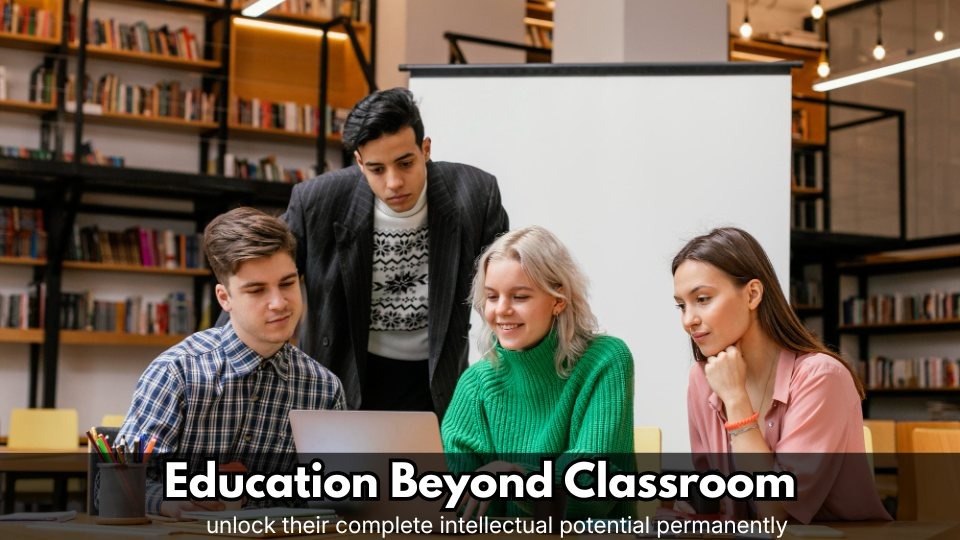
We will explore informal learning environments, examine project based education frameworks, and reveal mentorship program benefits that accelerate personal growth dramatically. Understanding education beyond the classroom empowers learners of all ages to unlock their complete intellectual potential permanently.
The Evolution of Learning Beyond Traditional Settings
Human knowledge acquisition has never been confined exclusively to formal institutional environments throughout history. Ancient civilizations transmitted wisdom through apprenticeships, storytelling, and hands-on experiences long before schools existed. Understanding education beyond the classroom requires recognizing this rich historical foundation shaping modern approaches.
The industrial revolution standardized schooling to produce workers with uniform skills for factory employment. This model prioritized compliance and memorization over creativity and critical thinking development. Contemporary workforce demands have exposed limitations of purely classroom based educational approaches significantly.
Research from cognitive science demonstrates that humans learn most effectively through diverse experiences and multiple contexts. Single environment learning creates narrow neural pathways limiting knowledge transfer to new situations. Education beyond classroom builds robust cognitive frameworks supporting adaptable problem solving abilities.
Experiential Learning Methods That Transform Understanding
Direct experience creates deeper knowledge retention than passive information reception through lectures alone. Learners who engage physically and emotionally with subject matter develop lasting comprehension surpassing textbook memorization. Educational psychologists confirm that experiential approaches produce superior long term outcomes consistently.
Internships and apprenticeships provide real world skill development impossible to replicate within traditional classroom settings. Students observe professionals navigating actual challenges while contributing meaningfully to genuine projects. This immersive exposure accelerates competency development dramatically compared to theoretical instruction alone.
Travel experiences expand worldview perspectives while developing cultural intelligence increasingly valuable in globalized economies. Encountering different societies, languages, and customs builds adaptability and empathy simultaneously. Education beyond the classroom includes intentional exploration of unfamiliar environments and communities.
Project Based Education Frameworks
Authentic projects requiring research, planning, and execution develop transferable skills applicable across multiple domains. Students learn resource management, collaboration, and deadline navigation through genuine project completion experiences. These capabilities directly translate to professional environments after formal schooling concludes.
Passion projects allow learners to pursue intrinsic interests while developing expertise in personally meaningful areas. Self directed exploration builds motivation and engagement levels impossible to achieve through assigned curriculum alone. Education beyond classroom thrives when individual curiosity drives learning direction.
Community Service Learning Benefits
Volunteer experiences connect academic knowledge with real community needs requiring practical application. Students witness how theoretical concepts function within complex social environments firsthand. This connection between learning and service deepens understanding while building civic responsibility.
Mentorship relationships often emerge through community engagement creating lasting guidance networks. Experienced professionals sharing wisdom with emerging learners perpetuate knowledge transmission across generations. Education beyond classroom flourishes through these meaningful intergenerational connections.

Digital Platforms Expanding Learning Opportunities
Online courses and educational platforms have democratized knowledge access globally in unprecedented ways. Learners anywhere can study with world class instructors regardless of geographic or economic limitations. This technological transformation supports education beyond classroom for millions previously excluded from quality learning opportunities.
Podcasts, documentaries, and educational content creators provide informal learning experiences entertaining while informing audiences simultaneously. Complex topics become accessible through engaging presentation formats reaching diverse learning preferences. Self directed learners curate personalized curricula from vast digital resources available freely.
Consider these digital learning strategies that certified educators recommend implementing consistently:
- Subscribe to educational channels covering subjects aligned with personal and professional development goals
- Complete online courses from accredited institutions offering certificates validating new competencies acquired
- Join virtual communities connecting learners worldwide for discussion and collaborative project opportunities
- Utilize language learning applications developing communication skills through daily practice sessions
- Follow thought leaders sharing insights through social media platforms and professional networking sites
Family and Social Learning Environments
Home environments provide continuous education beyond classroom through daily interactions and shared experiences. Parents modeling curiosity, reading habits, and intellectual engagement shape children’s lifelong learning attitudes profoundly. Family conversations exploring ideas build critical thinking capabilities organically.
Dinner table discussions addressing current events develop informed citizenship and articulate communication skills. Children observing adults analyzing information and forming reasoned opinions internalize these cognitive processes naturally. Intentional family learning creates supportive environments where questions and exploration receive encouragement.
Peer Learning Networks and Study Groups
Collaborative learning among peers reinforces understanding through explanation and discussion processes. Teaching concepts to others solidifies personal comprehension while identifying knowledge gaps requiring attention. Study groups leverage collective intelligence exceeding individual learning capabilities alone.
Diverse peer networks expose learners to varied perspectives and approaches expanding cognitive flexibility. Encountering different problem solving methods builds adaptable thinking applicable across multiple contexts. Education beyond classroom includes intentional cultivation of learning communities.
Mentorship Programs Accelerating Growth
Experienced mentors provide guidance, accountability, and wisdom impossible to acquire through formal instruction alone. These relationships offer personalized feedback and support tailored to individual learner needs specifically. Finding mentors in areas of interest accelerates skill development remarkably.
Professional mentorship bridges academic preparation and career readiness gaps effectively. Mentors share industry insights, networking opportunities, and practical wisdom accumulated through years of experience. Education beyond classroom reaches full potential when mentorship relationships flourish.
Developing Self Directed Learning Capabilities
Autonomous learners who identify knowledge gaps and seek solutions independently demonstrate valuable lifelong capabilities. This self directed approach requires metacognitive awareness and understanding personal learning processes deeply. Education beyond classroom ultimately depends on individual initiative and curiosity driving continuous growth.
Setting learning goals, identifying resources, and evaluating progress builds self regulation skills transferable across life domains. These executive function capabilities support academic achievement while preparing learners for professional environments demanding independent problem solving. Cultivating self direction creates learners who never stop growing intellectually.
Conclusion:
Unlocking complete learning potential requires embracing opportunities extending far beyond traditional institutional settings. Throughout this guide, certified learning specialists have shared research backed strategies covering experiential learning methods, digital platforms, family environments, and mentorship programs that accelerate personal growth dramatically.
Education beyond classroom transforms passive students into active knowledge seekers who adapt and thrive continuously. Self directed learning capabilities, project based education, and community service experiences build transferable skills impossible to develop through textbook memorization alone.
Start implementing one strategy today. Whether joining online courses, seeking mentorship relationships, or cultivating family learning environments, every intentional step matters. Embracing education beyond classroom empowers lifelong learning potential that serves you professionally and personally throughout your entire journey.