
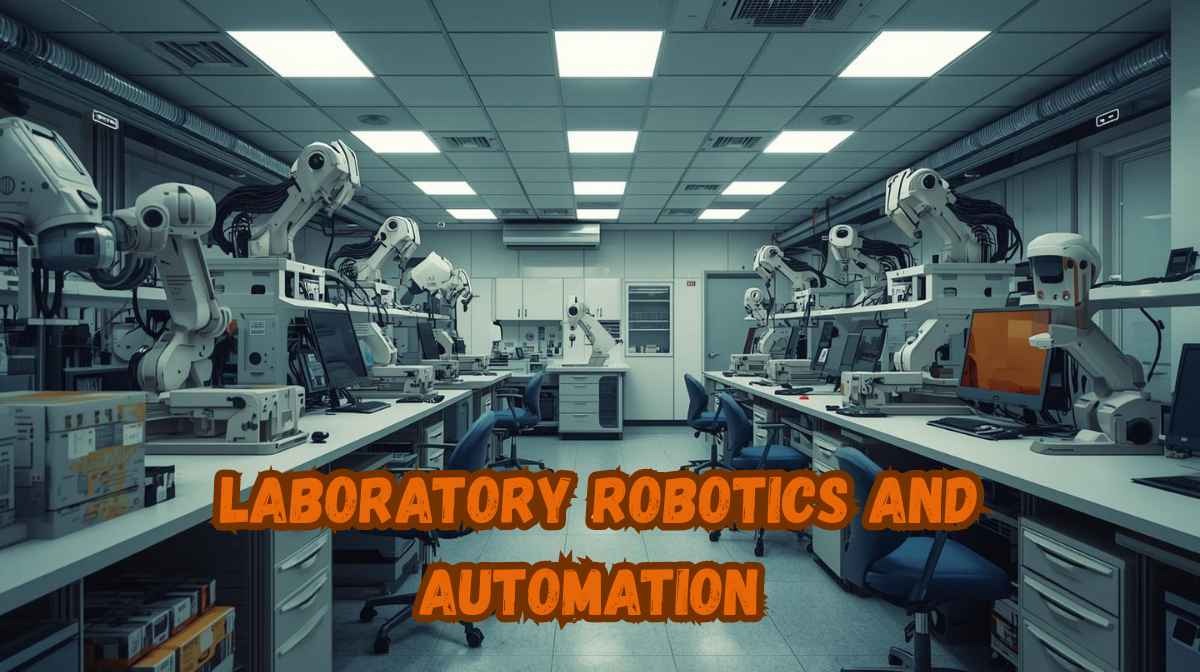
Laboratory robotics and automation are transforming how scientific research and testing are carried out today. As laboratories handle increasing volumes of experiments and data, the need for greater accuracy, speed, and consistency is more important than ever. These advanced systems help reduce human error, accelerate repetitive tasks, and free researchers to focus on deeper scientific analysis.
In this article, we will explore how automated tools are reshaping workflows, improving sample handling, and supporting data-driven discovery. We’ll also discuss their role in boosting productivity, streamlining complex procedures, and ensuring reliable results across various scientific fields. With the support of automated sample processing, high-throughput testing, and precision workflow systems, laboratories are achieving higher efficiency and innovation than ever before.
Definition and Overview of Laboratory Robotics and Automation
Laboratory robotics and automation refer to the use of intelligent mechanical systems and advanced software to conduct laboratory tasks with consistency, precision, and efficiency. These systems are designed to minimize manual involvement, reduce errors, and enhance productivity.
Related Article: Transforming Industries with Robotics Automation
As scientific research grows more complex, laboratories require tools that can support fast and reliable workflows. Automated systems can handle crucial tasks such as pipetting, sample mixing, solution preparation, and data logging, allowing researchers to focus more on experimental design and data interpretation. The increasing demand for accuracy, consistency, and high processing capability has led many research facilities, medical labs, and industrial testing centers to adopt automation solutions as an essential part of daily operations.
Core Principles and Key Functions
What These Systems Do
Automated laboratory systems are programmed to execute repetitive, delicate, or time-intensive procedures. Tasks that require precise volume control, consistent timing, and controlled conditions are ideal for automation. The systems ensure identical outcomes during each run, making research findings more reliable and reproducible.
Supporting Technologies
•Liquid handling automation for accurate dispensing
•Robotic arms for sample transportation and organization
•Integrated sensor-based monitoring for process validation
•Centralized Laboratory Information Management Systems (LIMS) for data tracking
These components interact as part of an efficient, connected workflow, maintaining accuracy and improving data traceability.
Background and Evolution
Early Development in Scientific Work
Historical Foundation
Early laboratory tools were developed to remove physical strain and improve accuracy in tasks such as pipetting and reagent measurement. Mechanical dispensers and fixed pipette stations marked the first steps toward automation, reducing the likelihood of human errors during experiment preparation.
Advancement Through Computing
With the introduction of computer-controlled systems, automation advanced rapidly. Laboratories began using digital controls to program step-by-step experiment sequences. Later, improvements in high-throughput testing, automated sample processing, and robotics integration further enhanced efficiency. These advancements significantly increased the speed of research and reduced manual workload, making automated laboratories essential in many industries.
Importance in Research and Industry
Why These Systems Matter
Growing Research Demands
Scientific projects often require handling hundreds or thousands of samples. Managing these manually would slow progress and increase the risk of inconsistent results. Automated systems allow labs to perform more experiments in a shorter time.
Need for Standardization
Consistency is a key requirement in scientific testing. Robots follow programmed instructions exactly, which makes experimental conditions uniform and ensures reproducible outcomes across multiple trials.
Fields Benefiting From Automation
Biotechnology
Complex biological experiments benefit greatly from robots that can maintain sterile conditions and precise handling.
Pharmaceuticals
Drug screening and formulation research rely on rapid testing of numerous compounds. Automation speeds this process significantly.
Clinical Diagnostics
Hospitals and medical centers use automated analyzers to produce accurate patient test results quickly, improving medical decision-making efficiency.
Benefits of Laboratory Robotics and Automation
Efficiency and Speed
Faster Output
Automation enables continuous workflows. Systems can process multiple samples simultaneously without fatigue, significantly reducing turnaround time for research and industrial testing.
Enhanced Accuracy and Reliability
Reduced Human Error
Manual handling can introduce variations based on skill, experience, or physical condition. Automated systems follow the same programmed technique each time, ensuring uniformity.
Safety and Contamination Control
Minimizing Direct Handling
Automation reduces direct contact with hazardous chemicals or biological materials. This ensures a safer working environment and decreases contamination occurrences.
Long-Term Cost Savings
Reduced Repetition and Resource Waste
Despite requiring an initial investment, the long-term gains include:
•Lower chemical and reagent waste
•Less need for repeated experiments
•Reduced labor for repetitive tasks
These savings contribute to better resource allocation and increased research capacity.

Challenges in Implementation
Financial and Infrastructure Requirements
Initial Investment
Acquiring robotic platforms and integrating them into existing laboratory layouts requires capital investment, facility adjustments, and infrastructure compatibility.
Technical Training Needs
Staff Preparedness
To gain full benefits, laboratory personnel must understand how to operate, maintain, and troubleshoot these systems. Continuous training ensures smooth functioning and prevents operational delays.
Integration Issues
Compatibility Challenges
Different instruments and software may not always communicate seamlessly. Ensuring that automated systems and data platforms work together requires careful planning and configuration.
Real-World Examples and Applications
Drug Development
Pharmaceutical Labs
In drug research, automation accelerates compound testing and experimental repetition, freeing scientists to analyze and interpret results rather than perform repetitive tasks.
Medical Testing Centers
Clinical Laboratories
Automated analyzers perform diagnostic tests efficiently, supporting fast and reliable patient assessment in hospitals and healthcare facilities.
Food and Environmental Testing Facilities
Public Safety Monitoring
Large-scale sample testing in water quality labs, environmental agencies, and food safety inspections is improved by automation, ensuring consistent evaluations that meet regulatory standards.
Best Practices for Effective Implementation
Planning and Assessment
Identify Suitable Processes
Labs should evaluate which procedures are most time-intensive or error-sensitive. Automating these tasks first ensures faster improvement and better resource application.
Phased Introduction
Gradual adoption allows teams to learn step-by-step, avoiding sudden workflow disruptions. This approach helps labs maintain productivity while integrating new technologies.
Training and Long-Term Maintenance
Continued Staff Education
Ongoing training ensures staff can use updated systems confidently, enhancing operational stability and reliability.
Equipment Care and Calibration
Regular calibration and maintenance prevent inaccuracies and extend the lifespan of automated equipment.
By implementing laboratory robotics and automation with thoughtful planning and skilled support, scientific facilities can achieve greater efficiency, accuracy, safety, and research excellence. These systems enable laboratories to work faster and more consistently, ultimately driving meaningful progress across science, medicine, and industry.
Conclusion
In summary, laboratory robotics and automation continue to transform research environments by improving precision, reducing manual workloads, and increasing overall efficiency. These advanced systems support consistent and reliable outcomes across different scientific and industrial fields. By adopting automation thoughtfully and providing proper training, laboratories can enhance productivity and maintain high standards of quality. As technology continues to evolve, exploring new automation solutions will help research facilities stay competitive and innovative. To remain informed and make better implementation decisions, consider learning more about the latest laboratory automation tools and workflow strategies.




1 Comment
Add Yours →[…] Related Article: Laboratory Robotics and Automation: Enhancing Precision and Efficiency in Modern Scientific Workflow… […]