The field of neurotechnology for biomimetic robots is redefining how machines think, move, and interact with their surroundings. By integrating neuroscience with robotics, engineers are creating intelligent systems that mimic human and animal behavior with remarkable precision. These robots are not just mechanical devices they represent a fusion of biological understanding and advanced technology.
This article explores how innovations in brain-machine interfaces, artificial intelligence, and sensorimotor control are enabling robots to learn, adapt, and respond like living organisms. From medical applications to industrial automation, this emerging discipline is unlocking new frontiers in intelligent design. Join us as we uncover how neurotechnology is bridging the gap between brain-inspired learning and robotic performance, shaping the future of human-machine collaboration.
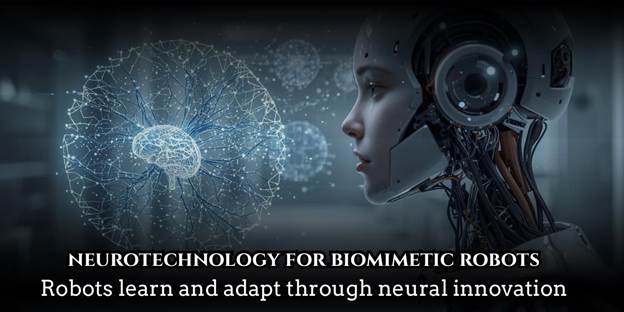
Understanding Neurotechnology for Biomimetic Robots
Neurotechnology for biomimetic robots combines neuroscience, robotics, and artificial intelligence to design systems that replicate biological intelligence. It focuses on how the nervous system communicates with the body and applies those principles to machines. By decoding neural signals and integrating them with robotic mechanisms, scientists create robots capable of learning, adapting, and responding to their surroundings.
This technology seeks to bridge the gap between biological and artificial intelligence. Instead of programming every response manually, biomimetic robots use brain-inspired algorithms and sensorimotor feedback to make decisions independently. The result is a new generation of machines that not only perform tasks but understand how to perform them efficiently and intuitively.
Historical Background of Neurotechnology and Robotics
The journey of neurotechnology began with early research on how neurons transmit electrical signals in the brain. Scientists like Luigi Galvani and Santiago Ramón y Cajal laid the foundation for understanding neural communication.
In robotics, progress accelerated in the late 20th century when engineers began applying biological inspiration to robotic design. The concept of biomimetic systems emerged machines modeled after living organisms. The fusion of neurotechnology and robotics gained momentum with advancements in artificial neural networks, brain-computer interfaces (BCIs), and machine learning.
Key Milestones in the Field
- 1950s: Early research on artificial intelligence and neural computation
- 1980s: Development of robotic limbs controlled by neural signals
- 2000s: Introduction of advanced prosthetics powered by neurofeedback
- 2010s onward: Growth of AI-driven biomimetic robots for medical, military, and industrial applications
Importance of Neurotechnology for Biomimetic Robots
The importance of this field lies in its ability to merge biological intelligence with machine precision. This combination allows robots to operate in dynamic, unpredictable environments with minimal human control.
Major Contributions
- Human-Robot Interaction (HRI): Enhances collaboration by enabling robots to interpret emotional or physical cues.
- Medical Innovations: Facilitates the development of neuroprosthetics and rehabilitation robots that restore movement to patients.
- Autonomous Systems: Enables robots to adapt their behavior using neural-inspired learning models.
Neurotechnology gives machines the capacity to “think” more like living beings, improving efficiency, accuracy, and safety in multiple sectors.
Benefits of Neurotechnology in Biomimetic Robotics
1. Enhanced Adaptability
Through neural signal processing, biomimetic robots can adapt to changes in the environment just as humans or animals do. This adaptability makes them valuable in disaster response, healthcare, and manufacturing.
2. Realistic Movement and Perception
By replicating biomechanical patterns found in nature, robots can move fluidly, balance effectively, and interact with delicate objects safely.
3. Improved Learning Capabilities
The integration of machine learning algorithms allows continuous improvement through feedback, reducing the need for external programming.
4. Expanded Medical Applications
Neurotechnology helps create assistive devices for individuals with mobility impairments. Brain-controlled prostheticsenable users to move limbs through neural impulses.
5. Cross-Disciplinary Collaboration
This field encourages cooperation among neuroscientists, engineers, AI researchers, and biologists, accelerating innovation.
Challenges and Limitations
Despite its potential, neurotechnology for biomimetic robots faces several challenges.
1. Complexity of the Human Brain
Replicating human cognition remains one of the greatest scientific challenges. The brain’s vast network of neurons and synapses is difficult to simulate with current technology.
2. Data Processing and Integration
Translating neural data into actionable robotic responses requires enormous computational power and sophisticated algorithms.
3. Ethical and Privacy Concerns
- Unauthorized access to neural data raises serious ethical issues.
- There is ongoing debate over how much autonomy should be granted to machines capable of human-like decision-making.
4. Cost and Scalability
Neurotecnology for biomimetic robots Developing and maintaining neuro-robotic systems involves high costs, limiting widespread adoption.
Real-World Applications
Healthcare and Rehabilitation
Neuroprosthetics and exoskeletons are helping patients regain mobility after spinal cord injuries or strokes. Brain-computer interfaces (BCIs) translate neural signals into robotic movement, allowing users to control prosthetic limbs naturally.
Industrial Automation
In manufacturing, biomimetic robots equipped with neural-inspired control systems can perform delicate assembly tasks requiring precision and adaptability.
Defense and Exploration
Neurotechnology-driven robots assist in hazardous missions, such as deep-sea or space exploration, where human presence is risky. These robots use autonomous navigation inspired by animal perception and reflexes.
Research and Education
Neuro-robotic systems are used in neuroscience research to model brain functions, helping scientists understand cognition, learning, and behavior.
Future of Neurotechnology for Biomimetic Robots
The future looks promising as researchers push toward developing fully self-learning robots that mirror biological intelligence. With advancements in AI, nanotechnology, and neural engineering, these systems will soon exhibit near-human adaptability and perception.
Integration with Artificial Intelligence
Neurotecnology for biomimetic robots Combining deep learning with neurotechnology enables robots to make context-based decisions, improving accuracy and flexibility.
Human Augmentation
The next generation of neuro-augmented systems may enhance human abilities rather than replace them, leading to seamless collaboration between humans and intelligent machines.
Conclusion
Neurotechnology for biomimetic robots is paving the way toward a future where machines can think, learn, and respond like living beings. By merging neuroscience, artificial intelligence, and robotics, this field is transforming healthcare, automation, and human interaction. Though challenges remain in complexity and ethics, the potential benefits far outweigh the obstacles. As research progresses, the line between biological and artificial intelligence will continue to blur. To stay informed about this rapidly evolving field, explore the latest innovations and discover how neurotechnology is redefining intelligent robotics.