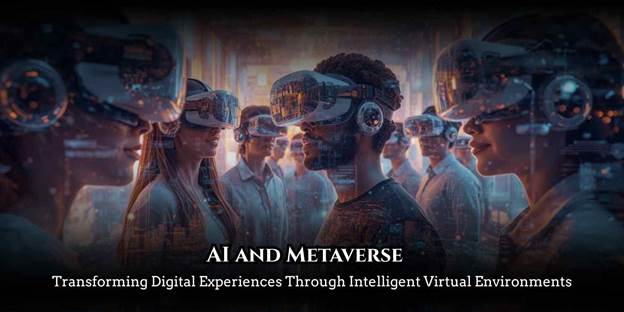
In today’s era of digital innovation, AI and Metaverse are redefining how humans interact, work, and play in the virtual world. The combination of artificial intelligence (AI) and the metaverse is not just about futuristic simulations; it’s about creating intelligent virtual environments that feel alive, responsive, and personalized. From gaming and social networking to education and business, AI and Metaverse technologies are transforming digital experiences through real-time interaction and intelligent automation.
This article explores how AI and Metaverse together are building a new digital ecosystem. You’ll discover their definitions, evolution, real-world applications, benefits, and challenges offering insights into how these two technologies are shaping the future of digital engagement and immersive connectivity.
Understanding AI and Metaverse: The Foundation of Digital Immersion
What is AI and Metaverse?
At its core, AI and Metaverse represent the fusion of two transformative technologies. Artificial Intelligence (AI) enables machines to learn, adapt, and make intelligent decisions, while the Metaverse is a shared virtual universe where people can interact using avatars in real-time. Together, they create dynamic, adaptive, and immersive digital experiences.
- AI adds intelligence, personalization, and automation.
- Metaverse provides a 3D, interactive, and social digital space.
The integration of AI and Metaverse allows users to experience digital worlds that respond intelligently to their actions, emotions, and preferences making virtual reality feel more human-centered and engaging.
The Evolution of AI and Metaverse
The concept dates back to early science fiction, but recent advancements in machine learning, virtual reality (VR), and blockchain have made it a practical reality. In the early 2000s, virtual platforms like Second Life laid the foundation for immersive environments. Later, AI-driven chatbots and natural language processing introduced intelligent interactivity.
Today, major tech companies like Meta, Microsoft, and NVIDIA are investing heavily in AI and Metaverse infrastructures. These innovations merge cloud computing, neural networks, and digital twin technologies to create real-time, intelligent simulations that revolutionize how users communicate, shop, learn, and collaborate virtually.
The Importance of AI and Metaverse in the Modern Digital World
The synergy between AI and Metaverse is crucial for advancing the next stage of the digital economy. Businesses are leveraging these technologies to enhance customer experiences, training, and product innovation.
Key benefits include:
- Personalization: AI tailors user experiences in the metaverse based on behavior and preferences.
- Automation: Virtual assistants, bots, and NPCs operate autonomously in digital spaces.
- Enhanced Realism: AI-powered motion tracking and speech recognition make avatars more lifelike.
- Data Insights: AI analyzes vast data from metaverse interactions to improve systems in real-time.
In short, AI and Metaverse create smarter, more connected, and more meaningful digital environments.
Real-World Applications
AI in Virtual Worlds and Gaming
Gaming is one of the earliest industries to adopt AI and Metaverse. Games now feature intelligent NPCs that adapt to player actions, realistic simulations powered by AI, and immersive worlds that evolve dynamically.
Education and Training
In education, AI and Metaverse enable interactive learning environments where students can explore digital classrooms or virtual laboratories guided by AI tutors. Corporations use these environments for virtual training simulations, improving learning outcomes and engagement.
Healthcare and Telemedicine
AI-powered metaverse spaces allow doctors to simulate surgeries, consult patients virtually, and analyze health data in real time. This combination enhances both accessibility and precision in healthcare delivery.
E-Commerce and Marketing
Brands use AI and Metaverse to create interactive shopping experiences. Virtual stores allow customers to try products digitally, while AI personalizes recommendations and visual displays for each user.
Key Benefits Of AI
Main Advantages:
- Immersive User Experience: Users interact naturally in digital worlds through AI-driven avatars.
- Scalable Virtual Workspaces: Businesses host meetings or collaborations in AI-managed virtual offices.
- Predictive Intelligence: AI analyzes data trends to forecast behavior and optimize metaverse environments.
- Accessibility and Inclusivity: Virtual spaces can adapt to different languages, abilities, and preferences through AI translation and customization.

Challenges and Ethical Considerations
While the potential of AI and Metaverse is vast, challenges remain:
- Data Privacy: AI systems collect vast user data that must be securely managed.
- Bias and Fairness: AI algorithms can reflect bias if not properly trained or monitored.
- Digital Addiction: Over-immersion in virtual environments may impact mental health.
- Infrastructure Costs: High-end computing resources are required to sustain intelligent metaverse platforms.
Ethical AI design, strong cybersecurity, and transparent governance are essential for the responsible growth of AI and Metaverse ecosystems.
The Future of AI and Metaverse: A Smarter Digital Tomorrow
The future of AI and Metaverse will focus on deep integration with emerging technologies like 5G, edge computing, and quantum AI. Expect more intuitive avatars, hyper-personalized spaces, and decentralized virtual economies. As these ecosystems evolve, they will blur the line between physical and digital realities, transforming how we connect, create, and collaborate in every aspect of life.
Conclusion
The rise of AI and Metaverse marks the beginning of an era where virtual and real worlds converge through intelligent design and real-time interactivity. From business to education and entertainment, their applications continue to grow, redefining the digital experience for everyone. Embracing AI and Metaverse technologies can unlock new opportunities for innovation, connectivity, and growth. To stay ahead in this evolving landscape, explore these technologies today and experience firsthand how intelligence and immersion are shaping the digital future.