
From the moment we wake up to the time we fall asleep, AI in Everyday Life quietly influences how we live, work, and connect. From smart assistants setting reminders to personalized content recommendations, technology has seamlessly woven itself into our routines. This digital shift is not just about convenience it’s redefining efficiency, comfort, and interaction in modern living.
In this article, we’ll explore how intelligent systems simplify tasks, enhance digital transformation, and support smart home automation. We’ll also look at the ways these innovations impact communication, productivity, and lifestyle choices. By understanding how technology shapes our day-to-day experiences, we gain a clearer view of its power to transform ordinary moments into extraordinary possibilities.
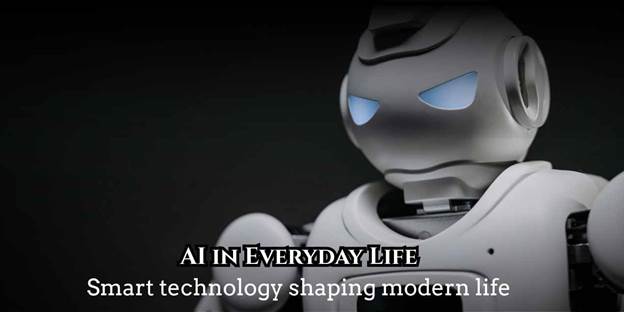
Understanding AI in Everyday Life
Definition and Concept
It refers to the use of intelligent systems that think, learn, and adapt like humans. It powers applications we use daily from voice assistants to smart devices making our lives simpler and more connected. Through machine learning, automation, and data analytics, AI processes information quickly and makes human-like decisions, improving both comfort and efficiency.
Related Article: AI Drawing From Text: How Machines Turn Words Into Stunning Visual Art
Background and Evolution
The foundation of AI dates back to the 1950s when scientists began creating machines capable of logical reasoning. Early computer programs could solve basic puzzles, but with time and the rise of digital transformation, AI became smarter and more accessible. Today, it influences nearly every field of communication, healthcare, education, and entertainment proving its vital role in modern living.
Importance of Technology in Daily Living
Making Life Easier and Smarter
The presence of AI in Everyday Life is no longer limited to labs or tech companies. It’s part of how we live every day. Whether it’s smart home automation or AI-based mobile tools, technology continuously enhances convenience and productivity.
Related Article: Service Robots: Transforming Work and Daily Life
Improving Productivity and Comfort
- Smart assistants like Alexa and Siri organize daily tasks and reminders.
- AI-powered cleaning devices maintain homes automatically.
- Office AI tools streamline emails, meetings, and scheduling.
- Recommendation systems provide personalized entertainment.
Enhancing Communication
•Chatbots give 24/7 instant responses.
•AI translators break down global language barriers.
•Predictive text features make digital conversations smoother.
These applications show how AI improves the way we connect and share information.
Benefits of AI Integration in Daily Life
Personalization and Efficiency
The biggest strength of AI in Everyday Life lies in its ability to personalize experiences.
•Streaming services suggest shows that match user preferences.
•E-commerce stores recommend products based on purchase history.
•Navigation apps find the fastest routes using real-time data.
Such predictive systems save time, reduce effort, and make life more comfortable.
Healthcare and Wellness
AI contributes to better health outcomes by analyzing patterns and supporting doctors.
•Fitness trackers monitor sleep, steps, and nutrition.
•AI-driven diagnostic systems detect early symptoms of diseases.
•Telehealth chatbots assist patients remotely.
This technological support helps people make informed choices about their well-being.
Education and Learning
AI has also redefined the learning experience.
•Adaptive learning software adjusts lessons to match each student’s level.
•AI tutors provide instant feedback and explanations.
•Data analytics help educators track student progress.
Through digital learning tools, AI ensures personalized and efficient education for all.

Challenges of Using AI Daily
Privacy and Security Concerns
While AI in Everyday Life brings convenience, it also raises privacy issues. These systems collect massive amounts of personal data, making transparency and protection critical. Responsible data handling is necessary to maintain trust between users and technology.
Job Replacement and Reskilling
Automation may replace repetitive human jobs, especially in manufacturing and customer service. However, it also creates opportunities in robotics, AI development, and data science. Workers can stay relevant by upgrading skills to adapt to technological shifts.
Related Article: AI and Marketing Automation: Transforming Customer Engagement and Business Growth
Over-Reliance on Technology
Heavy dependence on AI may reduce creativity and independent thinking. Balancing human judgment with machine support ensures AI remains a tool for empowerment, not replacement.
Real-World Examples of AI in Action
In Smart Homes
•Thermostats learn user temperature preferences.
•Lighting adjusts automatically to schedules.
•Security cameras use facial recognition for safety.
In Transportation
•Self-driving cars analyze data for safer navigation.
•Ride-sharing apps predict demand to reduce waiting times.
•Traffic systems use sensors to manage congestion.
In Entertainment
•Streaming platforms recommend songs or shows.
•Games adapt difficulty based on player behavior.
•Social networks curate personalized content feeds.
The Future of Technology in Daily Living
Emerging Innovations and Human Impact
The future of AI in Everyday Life promises smarter cities, advanced healthcare, and intelligent homes. Urban systems are being designed with AI-driven sustainability in mind, reducing waste, saving energy, and improving transport. In medicine, robots may soon assist surgeons with precision procedures, while in education, adaptive AI platforms will make learning even more individualized.
Balancing Progress and Responsibility
As technology continues to evolve, ethical development becomes crucial. Humans must ensure AI remains transparent, fair, and aligned with human values. The focus should be on collaboration between humans and machines, not competition.
A Smarter and Connected Tomorrow
Ultimately, AI in Everyday Life represents the merging of intelligence and convenience. It transforms how we live, think, and interact, bringing innovation to every aspect of existence. By embracing it responsibly, we can build a future where technology truly empowers humanity.
Conclusion
In today’s fast-moving world, AI in Everyday Life continues to redefine how people work, communicate, and live. From simplifying daily tasks to powering smart systems, it has become an essential part of modern living. While challenges like privacy and over-reliance exist, the benefits far outweigh the risks when used responsibly. Embracing innovation allows us to create a smarter, more connected future. To stay ahead, explore how AI in Everyday Life evolves and discover new ways it can make your routines simpler, safer, and more efficient.



1 Comment
Add Yours →[…] Related Article: AI in Everyday Life: How Technology Shapes Daily Living […]