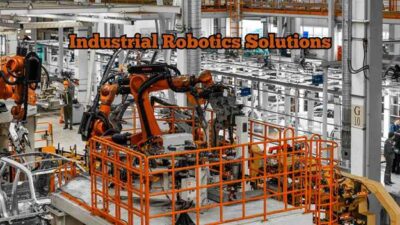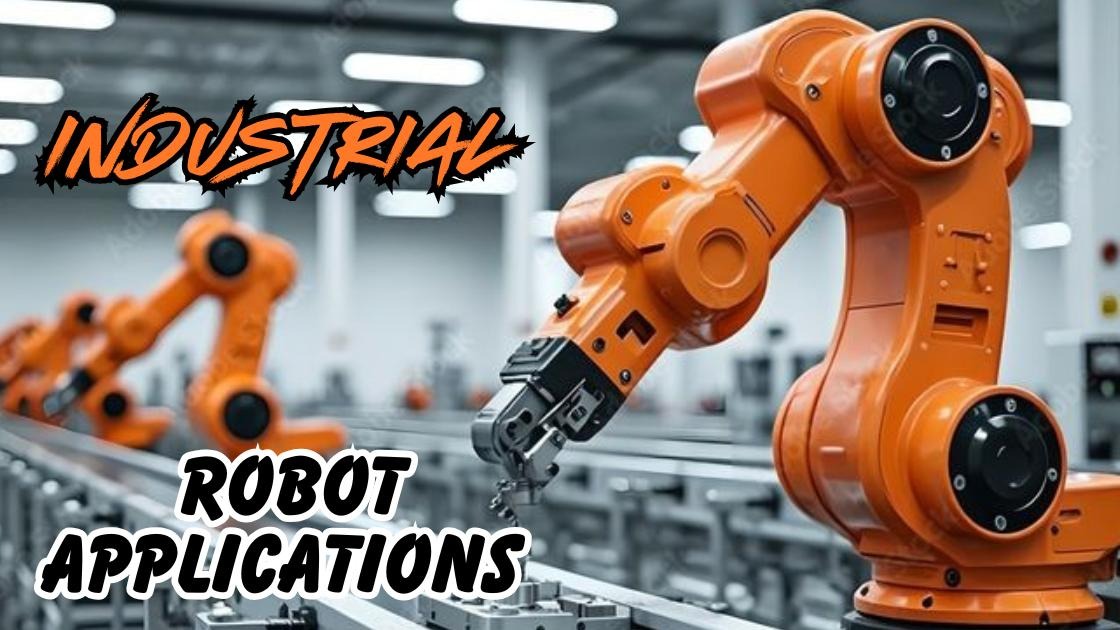
Industrial robot applications have completely revolutionized the way factories operate across the globe. From assembling cars to packaging consumer goods, these intelligent machines are reshaping production lines with remarkable speed and precision. As industries face growing demands for efficiency and quality, manufacturing automation has become essential for staying competitive in today’s fast-paced market.
This article explores how robotic technology is transforming modern production environments and why businesses are rapidly adopting these advanced solutions. We’ll examine real-world use cases, key benefits, and the industries leading this technological shift. Whether you’re a business owner exploring factory automation or simply curious about smart manufacturing trends, this comprehensive guide will provide valuable insights into how robots are driving the future of production. Get ready to discover why automation is no longer optional it’s essential.
What Are Industrial Robot Applications?
Industrial robot applications refer to the use of programmable machines designed to perform specific tasks in manufacturing and production environments. These robotic systems can handle repetitive, dangerous, or precision-based work with consistent accuracy.
Related Article: How Industrial Robotics Technology Is Transforming Modern Manufacturing
Unlike traditional machinery, modern robots are equipped with sensors, controllers, and advanced software. This allows them to adapt to different tasks and work alongside human operators safely.
A Brief History of Robotics in Manufacturing
The journey of industrial robot applications began in the 1960s when the first robotic arm was introduced in a General Motors factory. Since then, automation technology has evolved dramatically.
Today, robots are smarter, faster, and more affordable than ever before. The rise of artificial intelligence and machine learning has further expanded their capabilities. What was once a luxury for large corporations is now accessible to small and medium enterprises worldwide.
Why Industrial Robot Applications Matter Today
The importance of robotic automation in modern manufacturing cannot be overstated. Here’s why businesses are investing heavily in these technologies.
Meeting Consumer Demands
Consumers expect faster delivery times and higher quality products. Automated production systems help manufacturers meet these expectations without compromising standards.
Addressing Labor Shortages
Many industries face significant workforce challenges. Assembly line robots fill critical gaps by handling tasks that are difficult to staff consistently.
Staying Competitive Globally
Companies that embrace industrial robot applications gain a significant edge over competitors. Automation reduces costs and improves output, making products more competitive in global markets.
Key Types of Industrial Robot Applications
Different industries require different robotic solutions. Below are the most common types of robotic technology used in modern factories.
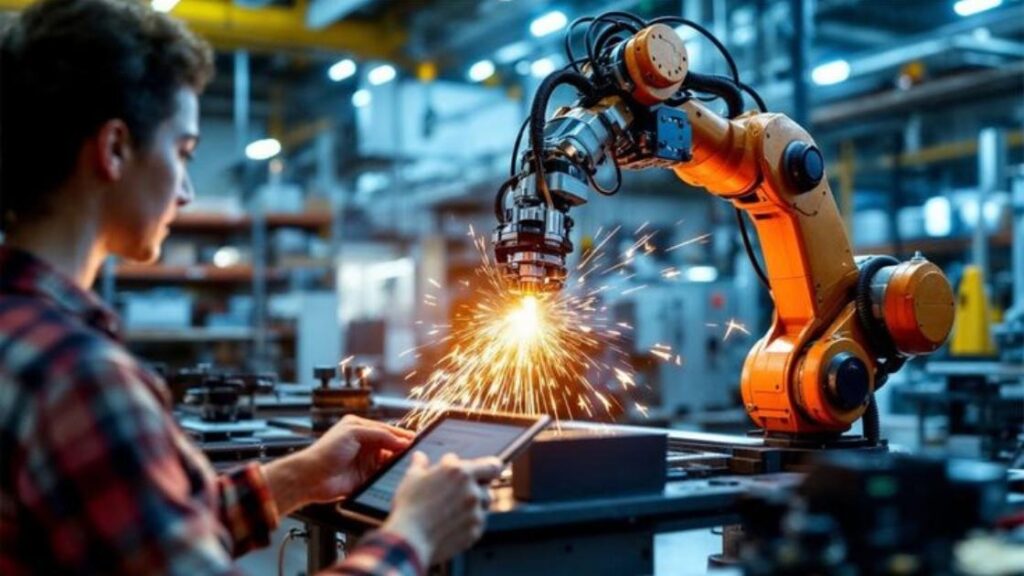
1. Welding and Fabrication Robots
These robots perform precision welding tasks in automotive and metal fabrication industries. They deliver consistent weld quality while protecting human workers from hazardous fumes and heat.
2. Material Handling and Warehouse Automation
Warehouse automation robots move materials, sort products, and manage inventory efficiently. Companies like Amazon have transformed logistics using these intelligent systems.
3. Assembly and Packaging Robots
From electronics to food products, assembly robots put together components and package finished goods. They work at high speeds with minimal errors.
4. Painting and Coating Robots
These specialized machines apply paint and protective coatings evenly across surfaces. They reduce waste and ensure uniform finishes every time.
Benefits of Industrial Robot Applications
The advantages of adopting industrial robot applications extend across multiple areas of business operations.
- Increased Production Efficiency: Robots work around the clock without breaks, significantly boosting output levels.
- Improved Product Quality: Precision manufacturing ensures every product meets exact specifications with minimal defects.
- Enhanced Worker Safety: Robots handle dangerous tasks, reducing workplace injuries and creating safer environments.
- Lower Operational Costs: Although initial investment is required, long-term savings on labor and waste are substantial.
- Flexibility and Scalability: Modern programmable robots can be reprogrammed for different tasks as production needs change.
Challenges of Implementing Robotic Systems
While the benefits are clear, businesses must also consider potential obstacles when adopting industrial robot applications.
High Initial Investment
Purchasing and installing robotic systems requires significant upfront capital. However, financing options and decreasing costs are making adoption more feasible.
Technical Expertise Requirements
Operating and maintaining robots requires skilled technicians. Companies must invest in workforce training to maximize their investment.
Integration with Existing Systems
Connecting new robots with legacy equipment can be complex. Proper planning and expert consultation help ensure smooth integration.
Real World Examples of Success
Several leading companies demonstrate the power of smart manufacturing through robotics.
- Tesla: Uses extensive robotic automation in its electric vehicle production lines.
- Foxconn: Employs thousands of robots to manufacture electronics for major global brands.
- Coca-Cola: Relies on automated bottling systems to produce millions of beverages daily.
These examples prove that industrial robot applications deliver measurable results across diverse sectors.
The Future of Manufacturing Automation
The evolution of collaborative robots and AI-powered systems continues to expand possibilities. As technology advances, even more industries will benefit from robotic solutions. Businesses that adapt early will lead their markets into the next era of production excellence.
Related Article: Transforming Industries with Robotics Automation
Conclusion
Industrial robot applications have fundamentally changed how products are made across the globe. From welding and assembly to packaging and material handling, robotic automation delivers unmatched efficiency, precision, and safety benefits.
While challenges like initial costs and technical training exist, the long-term advantages far outweigh these hurdles. Companies embracing manufacturing automation are already seeing improved productivity and reduced operational expenses.
As technology continues advancing, industrial robot applications will become even more accessible and powerful. Businesses that invest in these solutions today position themselves for sustained success in an increasingly competitive marketplace. The future of smart manufacturing is here, and it’s driven by robotics.