
Industrial robotics solutions are redefining how manufacturing and production systems operate, bringing unmatched efficiency and precision to modern industries. As smart factories evolve, robotics has become a cornerstone of automation, seamlessly integrating advanced sensors, AI, and data-driven technologies. These innovations enable faster production, reduced errors, and optimized workflows.
This article explores how cutting-edge robotic systems are transforming industrial operations, improving productivity, and shaping the future of intelligent manufacturing. Discover how these automated systems are setting new benchmarks for innovation and sustainability in today’s competitive industrial landscape.
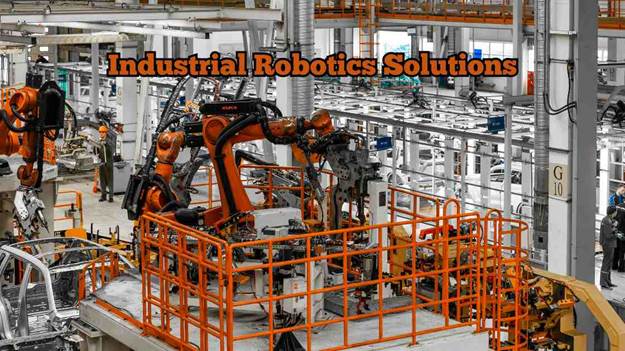
Understanding Industrial Robotics Solutions in Smart Factories
Industrial robotics solutions are advanced automated systems designed to perform repetitive, complex, or hazardous tasks in manufacturing and production environments. They integrate robotics, artificial intelligence (AI), sensors, and machine learning to streamline operations and enhance productivity. As industries transition to smart manufacturing, these robotic systems have become vital for maintaining consistency, precision, and efficiency in modern production lines.
Related Article: How Industrial Robotics Technology Is Transforming Modern Manufacturing
Definition and Evolution of Industrial Robotics
The concept of industrial robotics dates back to the early 1960s when the first programmable robotic arm, Unimate, was introduced to assist in automobile manufacturing. Since then, robotics technology has evolved significantly, shifting from simple mechanical arms to intelligent, interconnected robotic systems capable of learning and adapting.
Today, industrial robots are used in sectors such as automotive, electronics, pharmaceuticals, food processing, and logistics. The introduction of the Internet of Things (IoT) and Industry 4.0 technologies has further expanded their role, enabling real-time communication between machines, systems, and human operators.
Importance of Industrial Robotics in Modern Automation
Industrial robotics solutions play a crucial role in transforming traditional factories into smart factories. By automating repetitive tasks and ensuring high accuracy, they reduce operational costs and increase productivity.
Related Article: Transforming Industries with Robotics Automation
Some key areas where these solutions make an impact include:
- Enhanced production efficiency: Robots can operate 24/7 without fatigue.
- Improved quality control: Advanced sensors and AI ensure consistent output.
- Worker safety: Robots handle hazardous tasks, reducing workplace accidents.
- Data-driven operations: Connected robots provide valuable performance insights.
Core Components of Industrial Robotics Solutions
To understand how these systems function, it’s essential to know their main components:
- Controllers – The brain of the robot, responsible for processing data and executing commands.
- Actuators – The muscles that enable movement and precision.
- Sensors – Provide feedback on the robot’s environment and position.
- End effectors – The tools or grippers that interact with materials or objects.
- Software – Powers the automation process and ensures coordination between components.
Benefits of Implementing Industrial Robotics Solutions
Organizations adopting robotics experience numerous advantages, including improved performance and reduced costs.
Below are the most significant benefits:
- Increased productivity: Robots can perform tasks faster and with fewer errors than humans.
- Cost efficiency: Automation lowers production and labor expenses over time.
- Scalability: Systems can be reprogrammed and upgraded to meet growing demands.
- Consistency: Robots maintain high accuracy and repeatability in every process.
- Sustainability: Efficient energy use and waste reduction contribute to eco-friendly production.
Applications of Industrial Robotics in Smart Factories
Industrial robots have diverse applications in smart manufacturing environments:
- Material handling: Automated movement and storage of components.
- Assembly: Precision fitting of complex parts in automotive and electronics industries.
- Welding and painting: High accuracy and safety in operations that involve heat or chemicals.
- Inspection and testing: AI-powered robots ensure quality assurance and defect detection.
- Packaging: Fast and efficient product packaging for logistics and shipping.
Challenges in Adopting Industrial Robotics Solutions
While the advantages are numerous, industries face certain challenges in integrating these systems effectively:
- High initial costs: Installation, programming, and setup require substantial investment.
- Skilled workforce demand: Operators and technicians need specialized training to manage robotic systems.
- Maintenance requirements: Regular servicing is necessary to ensure smooth operation.
- Cybersecurity concerns: As robots connect to networks, data protection becomes critical.
- Integration complexity: Aligning new robotic systems with legacy equipment can be difficult.
Real-World Examples of Industrial Robotics Solutions
- Automotive Industry: Companies like Toyota and BMW use robotic arms for assembly and welding to improve production speed and quality.
- Electronics Manufacturing: Brands such as Samsung employ precision robots for circuit board assembly and inspection.
- Pharmaceutical Sector: Robots handle packaging, labeling, and quality control in sterile environments.
- Food and Beverage: Automation assists in sorting, packaging, and quality testing to ensure product safety.
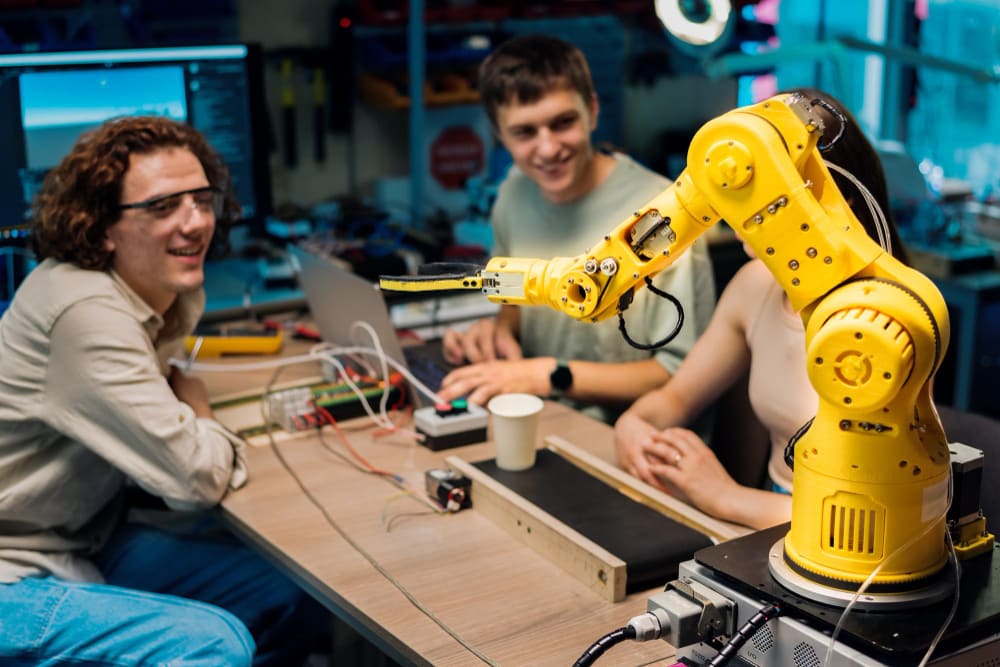
Future Trends and Innovations
The future of industrial robotics solutions is driven by advancements in AI, collaborative robots (cobots), and digital twins. Collaborative robots are built to operate safely with human workers, increasing efficiency and adaptability in the workplace. Meanwhile, digital twin technology allows real-time simulation and monitoring of robotic systems to optimize performance.
Emerging trends include:
- AI-powered decision-making: Enhancing predictive maintenance and production planning.
- 5G connectivity: Ensuring faster data transmission for real-time control.
- Sustainable robotics: Focusing on energy efficiency and eco-friendly materials.
- Cloud robotics: Enabling centralized control and monitoring across multiple sites.
Conclusion
In conclusion, industrial robotics solutions are transforming the landscape of smart manufacturing by improving productivity, precision, and safety. These technologies empower industries to achieve higher efficiency and sustainable growth through automation and intelligent systems. As innovation continues to advance, integrating robotics with AI and IoT will further enhance operational excellence. Businesses that embrace these solutions today will stay competitive in the evolving industrial era. To stay ahead, explore more about emerging automation technologies and how they can shape the future of modern production.


1 Comment
Add Yours →[…] Related Articles: How Industrial Robotics Solutions Are Revolutionizing Automation in Smart Factories […]