Something fundamental broke in search over the last 18 months, and it was not another algorithm update. For the first time in 25 years, the model itself changed. Google no longer simply ranks pages and sends users to them. It reads those pages, synthesizes the information, and answers the question directly right at the top of the results page, before a single blue link appears.
Table of Contents
At the same time, a quieter revolution has been reshaping the other side of SEO. Link building historically a manual, relationship-heavy, and expensive process is being transformed by AI-powered prospecting, automated workflows, and self-service platforms that put enterprise-level capabilities into the hands of solo marketers and small teams.
Most guides in 2026 cover the search side of this shift. Almost none cover the link building side. This guide covers both, because ranking and building authority are not separate games they are two halves of the same strategy.
Key data points for 2026: 48% of Google searches now show an AI Overview, 61% drop in organic CTR when an AI Overview appears, 527% year-over-year growth in AI search traffic, and 93% of AI Mode searches end without a click.
The Search Landscape Has Split in Two
For over two decades, SEO success meant one thing: rank as high as possible on Google and earn the click. That model still exists, but it now shares the stage with something entirely new AI-generated answers that resolve queries before a user ever reaches your website.
Google AI Overviews appear on up to 48 percent of all search queries as of early 2026, with coverage exceeding 65 percent for long-tail informational queries of seven or more words. When these AI-generated answer blocks appear, the organic click-through rate for position one drops from 1.76 percent to just 0.61 percent a 61 percent decline. Even queries without AI Overviews have seen organic CTR fall 41 percent, suggesting a broader behavioral shift in how people interact with search results.
Meanwhile, Google AI Mode has reached 75 million daily active users and over 100 million monthly active users globally. A staggering 93 percent of AI Mode sessions end without a single click to any website.
These numbers sound alarming, but the full picture is encouraging. Total search volume across Google and AI platforms has grown 26 percent globally. AI search traffic itself is up 527 percent year-over-year. And visitors arriving from AI citations convert at 4.4 times the rate of traditional organic traffic. The traffic may be smaller. The intent is dramatically higher.
The brands winning in 2026 are playing two games simultaneously. They optimize for traditional rankings because research consistently shows that 99 percent of AI Overview citations still come from pages in the organic top ten. And they optimize for AI citation because being referenced inside a generated answer now delivers more qualified visitors than holding the number one ranking by itself.
This dual-track reality ranking plus citation is the defining strategic shift of modern search.
GEO: The Framework Behind AI Citation
Generative Engine Optimization, or GEO, is the practice of structuring content so that AI systems can find, trust, and cite it inside generated answers. Formalized in peer-reviewed research from Princeton University, Georgia Tech, the Allen Institute for AI, and IIT Delhi, GEO has rapidly become the dominant strategic framework for forward-thinking marketers.
The simplest distinction: SEO gets you ranked. GEO gets you cited.
Traditional SEO focuses on keywords, meta tags, and backlink profiles with the goal of ranking number one and earning clicks. GEO focuses on making your content extractable, authoritative, and self-contained so that AI systems cite you as a trusted source inside generated answers. SEO success is measured in rankings, impressions, and CTR. GEO success is measured in citation frequency, brand mention sentiment, and share of voice in AI responses. The authority signals differ too SEO relies on backlinks and domain authority, while GEO weighs brand mentions, Reddit and YouTube presence, author credentials, and schema markup. Critically, GEO does not replace SEO. It extends it.
The critical insight: you must rank well first to even be considered as a citation source. But ranking alone is no longer sufficient.
The Island Test
AI systems chunk content into paragraphs and evaluate each one independently using vector embeddings. If a paragraph can stand on its own answering a specific question clearly without needing the surrounding context it produces a cleaner embedding and matches user queries more reliably. This concept, sometimes called the “Island Test,” is the single most commonly neglected GEO signal.
The practical application: front-load your answers. The first 200 words of any article should directly and completely address the primary query. If an AI system only processes your opening, it should understand the core argument, the key data point, and the primary recommendation.
Content Strategy That Gets Cited, Not Just Ranked
The rise of AI writing tools has created a paradox. It has never been easier to produce content at scale, and it has never been harder to make that content matter. According to an Ahrefs analysis of 900,000 pages, 74.2 percent of new web pages contain some AI-generated content, though only 2.5 percent are fully AI-generated without human editing. Google does not penalize AI-assisted content by default but it aggressively deprioritizes thin, generic, undifferentiated content regardless of how it was produced.
Research shows that pages exceeding 20,000 characters average roughly ten AI citations each, while pages under 500 characters average just 2.4. Depth is not optional in 2026 it is a direct signal of authority.
Content Formats That AI Systems Prefer to Cite
Q&A and FAQ formats perform exceptionally well because each answer is self-contained and directly extractable. AirOps research confirms that validation pages with list sections earn up to 26.9 percent more citations, and comparison pages with multiple tables earn 25.7 percent more.
Comprehensive pillar guides that cover an entire topic cluster in one URL demonstrate topical authority. The top 4.8 percent of URLs cited in ChatGPT answers are comprehensive pages that address “what is it,” “who uses it,” “how to choose,” and “pricing” all in a single resource.
Original research and proprietary data force AI systems to cite your source specifically. Early-discovery content with five to seven unique statistics earns a 20 percent higher citation likelihood, because AI must reference you to report data that exists nowhere else.
Step-by-step how-to guides map perfectly to the sequential answer format that AI systems prefer. Implement HowTo schema markup to strengthen this signal.
E-E-A-T: The Non-Negotiable Trust Framework
Google’s Experience, Expertise, Authoritativeness, and Trustworthiness framework has become the single most important structural signal for both rankings and AI citations. AI systems are fundamentally trust machines they select sources they consider authoritative and skip everything else.
In practice: author bios with real, verifiable credentials matter. Sourced statistics matter. Case studies with specific outcomes matter. Consistent brand presence across LinkedIn, YouTube, Reddit, and industry publications matters. Research shows LLMs are 28 to 40 percent more likely to cite content with strong authority signals.
Only about 12 percent of Fortune 1000 companies have valid Organization Schema linked to a Knowledge Graph ID. This structured data helps AI systems categorize, attribute, and trust your content. If your competitors have not implemented it either, this is one of the fastest ways to gain an edge.
How AI is Transforming Link Building
This is the section most AI-and-SEO guides skip entirely, and it is arguably where the most practical changes are happening for marketers in 2026.
Backlinks remain a core ranking signal authoritative backlinks and digital PR are adopted by 81 percent of SEO practitioners, according to a 2026 GoodFirms survey and since 99 percent of AI Overview citations come from top-ranking pages, a strong link profile is essential for AI visibility too. What has changed is every part of the process surrounding how those links are found, evaluated, built, and tracked.
AI-Driven Prospecting and Outreach
Traditional link building prospecting involves manually searching for websites in your niche, evaluating their domain authority, checking content relevance, and compiling lists in spreadsheets. It was slow, tedious, and prone to human error.
AI-powered prospecting tools have collapsed that timeline. They analyze thousands of potential link sources in minutes, evaluating not just domain metrics but content relevance, audience overlap, topical alignment, and even the likelihood that a particular site will respond to outreach. Machine learning models examine competitor backlink profiles to identify the exact opportunities you are missing and predict which placements will deliver the highest ROI.
A single marketer can now identify more high-quality opportunities in an afternoon than an entire team could find in a week using manual methods.
Smart Anchor Text Optimization
Anchor text strategy has also been transformed. Instead of guessing which variations to use, AI tools analyze your existing backlink profile, compare it against competitors ranking for your target keywords, and recommend the exact distribution of branded, exact-match, partial-match, and generic anchors that will look natural to search engines. Over-optimized anchor text profiles remain one of the fastest ways to trigger a penalty, and AI removes the guesswork with data-backed distribution plans.
The Rise of Marketing Automation in Link Building
One of the most significant shifts in 2026 is the emergence of digital marketing technology platforms that consolidate prospecting, ordering, and tracking into unified workflows. Instead of juggling spreadsheets, email chains, and manual follow-ups, marketers can now manage entire link building campaigns from a single interface selecting target niches, setting budgets, and monitoring live placements as they publish.
These platforms represent a broader trend in marketing automation. The same impulse that gave us email marketing dashboards and social media schedulers has now reached link building. The efficiency gains are substantial: what used to require a dedicated outreach specialist and weeks of communication can now be initiated, paid for, and tracked from one screen.
Self-Service Link Building Goes Mainstream
Perhaps the most democratizing development is the rise of the self-service link building dashboard. These platforms allow marketers to select link grades, specify target URLs and niches, set anchor texts, pay securely, and track every placement in real time domain authority, referring domains, anchor text, and live URL all without negotiating with individual webmasters or managing vendor relationships.
For small businesses and independent marketers who previously could not afford agency-level link building services, this is a genuine game-changer. The barrier to entry has dropped dramatically while the quality controls automated DA checks, niche relevance matching, live URL verification have actually improved through automation.
The best results still come from combining AI-powered tools with strategic thinking. Which pages should you target for links? What does healthy anchor text diversity look like for your profile? How does link building fit into your broader GEO strategy? Automation handles operational overhead. Strategy remains a human function.
AI for Defensive Link Monitoring
AI also plays a growing role on the defensive side. Machine learning tools now continuously monitor your backlink profile, flagging toxic or spammy links that could trigger penalties before they cause damage. They analyze competitor link acquisition patterns to spot opportunities. And they provide predictive insights about which link types will deliver the highest ROI for your specific niche.
The combination of smarter prospecting, automated workflows, self-service ordering, and continuous monitoring means link building in 2026 is faster, more accessible, and more data-driven than at any point in the history of SEO.
Technical SEO in the AI Era
The fundamentals HTTPS, mobile optimization, page speed, clean site architecture remain stable and essential. The new complexity comes from AI bot management, structured data for citation engines, and page speed as a GEO signal.
AI Bot Management: Check Your Robots.txt
Roughly one in three B2B SaaS companies are blocking AI crawlers in their robots.txt most of them unintentionally. If AI systems cannot crawl your content, they cannot cite it. Audit your robots.txt today and ensure these bots have access: GPTBot (OpenAI), Google-Extended (Google AI features), PerplexityBot, and ClaudeBot (Anthropic).
Schema Markup for AI Citation
Structured data helps AI systems understand, categorize, and attribute your content. The highest-priority schema types for 2026: Organization schema (links your brand to its Knowledge Graph entity), Article and BlogPosting schema (with author and dateModified properties), FAQPage schema (enables direct Q&A extraction), and HowTo schema (maps sequential content to AI answer formats).
Page Speed as a GEO Signal
Research reveals that 46 percent of ChatGPT bot visits begin in reading mode a stripped down HTML version with no CSS or JavaScript. And 63 percent of ChatGPT agents leave a page immediately when it loads slowly. An experiment by OtterlyAI also found that AI only cites HTML pages and ignores Markdown-formatted pages. Rendering speed and clean HTML structure are now GEO signals, not just UX considerations.
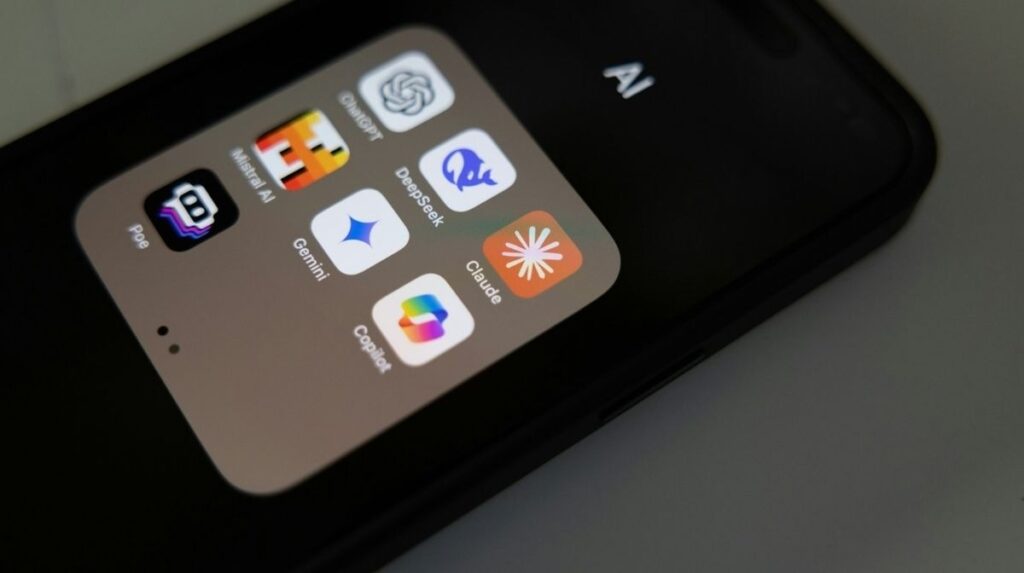
Optimizing Beyond Google: ChatGPT, Gemini, and Perplexity
Google still commands roughly 90 percent of global search market share. But AI search is growing fast. ChatGPT alone has reached 900 million weekly active users as of February 2026.
ChatGPT (~64.6% of AI search traffic) relies primarily on Bing rankings and clean HTML. GPT-5 now uses “site:” operators to find brand-owned sources directly. It often cites pages ranking at position 21 and beyond, creating opportunity for smaller sites with strong content.
Gemini (~22.0%) uses Google’s index and is natively multimodal. YouTube content with VideoObject schema is heavily cited for how-to queries.
Perplexity (~1.9%) is a citation-first answer engine requiring high domain authority, frequently updated content, and explicit sourcing.
A notable signal: ChatGPT’s latest model cites 20 percent fewer domains per query, dropping from 19.1 to 15.2 cited sources. Competition for citation slots is intensifying only the most authoritative, well-structured content earns a reference.
Five AI SEO Mistakes Killing Your Visibility Right Now
1. Optimizing for rankings but ignoring citations. You can rank number one and still be invisible in the AI answer above your listing. Only 38 percent of pages cited in AI Overviews also rank in the traditional top ten down from 76 percent seven months earlier.
2. Blocking AI crawlers without realizing it. Check your robots.txt today. If GPTBot, Google-Extended, PerplexityBot, or ClaudeBot are blocked, you have removed yourself from citation eligibility entirely. One in three B2B companies makes this mistake.
3. Producing content at scale without depth. AI tools make it easy to publish shallow content. Citation systems deprioritize exactly this. Depth, specificity, original data, and genuine expertise are the only differentiators.
4. Ignoring community platforms. Reddit, YouTube, and Wikipedia are among the most-referenced domains by major LLMs. Genuine community participation is now an organic search strategy.
5. Measuring the wrong metrics. Only 16 percent of brands systematically track AI search performance. Add AI citation frequency, AI referral conversion rates, and brand mention sentiment to your dashboard.
Your 30-Day Action Plan
Week 1 AI Brand Perception Audit. Query ChatGPT, Perplexity, Gemini, and Google AI Overviews with your core service questions. Document where your brand appears and where it does not. Audit robots.txt for AI crawler blocks.
Week 2 Schema and Technical Audit. Verify Organization, Article, FAQPage, and HowTo schema are implemented correctly. Flag thin pages under 1,500 words on important topics for expansion.
Week 3 Content Restructuring. Rewrite the first 200 words of your top 20 pages to directly answer the primary query. Apply the Island Test to key paragraphs. Add FAQ sections with structured markup.
Week 4 Link Building and Community. Evaluate your link building workflow for efficiency gaps. Explore self-service platforms that consolidate prospecting, ordering, and tracking. Begin consistent participation in two to three relevant online communities.
Is AI killing SEO in 2026?
No. AI is transforming SEO, not eliminating it. Total global search volume has increased 26 percent as AI platforms supplement traditional search. What AI has made obsolete is keyword stuffing, thin content, and low-quality link building. The fundamentals ranking well, building authority, creating valuable content matter more than ever. 99 percent of AI Overview citations come from the organic top ten.
What is the difference between SEO and GEO?
Traditional SEO optimizes for Google rankings and clicks. GEO Generative Engine Optimization optimizes for being cited inside AI-generated answers on platforms like Google AI Overviews, ChatGPT, Perplexity, and Gemini. GEO extends SEO rather than replacing it you need both working together.
Do backlinks still matter in 2026?
Absolutely. Backlinks remain a core ranking signal, and since AI Overview citations overwhelmingly come from top-ranking pages, a strong link profile is essential for AI visibility. What has changed is how links are built AI tools now handle prospecting, quality analysis, anchor text optimization, and workflow automation through self-service platforms.
How does AI specifically help with link building?
AI transforms link building at every stage: accelerating prospecting, optimizing anchor text distribution, powering self-service dashboard platforms for ordering and tracking, and providing ongoing monitoring to flag toxic links and identify opportunities.
Which AI search platforms should I optimize for beyond Google?
Prioritize ChatGPT (relies on Bing rankings, ~65 percent of AI search traffic), Gemini (uses Google’s index, favors video content), and Perplexity (cites authoritative, well-sourced content). Optimizing across all three significantly expands your AI visibility.