Sustainability in early childhood is the practice of teaching children from birth through age eight how to care for the environment through daily habits, responsible resource use, and meaningful connections with nature. It is not limited to classroom recycling charts. It means weaving ecological thinking into the way young children eat, play, create, and relate to the living world.
According to UNESCO’s Education for Sustainable Development framework, environmental values that take root before age eight tend to persist throughout a person’s lifetime. This makes the preschool and early primary years the single most influential window for shaping ecological awareness.
The responsibility falls on parents, caregivers, and early childhood educators equally. Children who learn to value natural resources during these formative years are far more likely to grow into adults who make thoughtful decisions about consumption, waste, and community health.
Table of Contents
Why Does Environmental Education Matter in the Early Years?
Environmental education matters in the early years because young children are hardwired to be curious about the natural world. They question why leaves change color, where rain comes from, and what worms eat. Directing that built in curiosity toward structured eco learning cements habits that last decades.
Here are the key reasons this matters:
Habits form early and stick. A 2023 OECD report on education policy noted that consumption and waste behaviors are largely shaped within the first ten years of life. Intervening during this period produces stronger results than programs aimed at teenagers or adults.
It strengthens cognitive skills. Exploring questions about water cycles, food waste, or animal habitats builds problem solving ability and cause and effect reasoning in children as young as three.
Empathy and social awareness grow. When children understand that their choices affect other people, animals, and ecosystems, they develop deeper empathy and a stronger sense of shared responsibility.
Physical and emotional health improve. The American Academy of Pediatrics has consistently highlighted that outdoor, nature based learning supports physical fitness, lowers stress hormones, and improves emotional regulation in young children.
Core Principles of Eco Education for Preschoolers and Kindergartners
Strong environmental education for young learners rests on four foundational principles that keep lessons age appropriate and effective.
Prioritize hands on play. Children absorb green concepts far more effectively through gardening, composting, water experiments, and nature walks than through worksheets or screen based lessons.
Engage all the senses. Letting children touch soil, smell herbs, listen to birdsong, and observe insects creates an emotional bond with nature. Research in developmental psychology consistently shows that this sensory bond is what drives long term environmental stewardship.
Start with what is local and familiar. A backyard puddle, a neighborhood park, or a windowsill herb garden means more to a four year old than abstract discussions about melting glaciers or distant rainforests.
Model the behavior yourself. Young children mirror adults instinctively. When parents and teachers visibly turn off lights, carry reusable water bottles, and sort household waste, children internalize those habits without needing a formal lesson.
Practical Sustainability Activities for Early Childhood Settings
Here are proven activities, grouped by theme, that work well for children aged two through six in daycares, preschools, and home environments.
Nature Exploration and Outdoor Learning
Schedule regular outdoor walks where children collect natural items like leaves, pinecones, pebbles, and feathers. Use these materials for art collages, texture sorting games, or storytelling prompts. Nature scavenger hunts sharpen observation skills while expanding vocabulary around plants, weather patterns, and local wildlife.
Waste Reduction and Composting Projects
Introduce a small composting bin in the classroom or kitchen. Let children take turns adding vegetable scraps and fruit peels, then observe decomposition over several weeks. This hands on process teaches patience, natural cycles, and the concept that waste can become something useful. Pair this with a simple “use both sides” policy for drawing and painting paper.
Water Conservation Experiments
Give two groups of children the same measured amount of water. One group uses water freely to complete a task while the other group tries to use as little as possible. Afterward, compare the remaining water and discuss why conserving water matters for rivers, fish, farms, and families. This kind of structured play builds both numeracy and ecological thinking simultaneously.
Growing Food Together
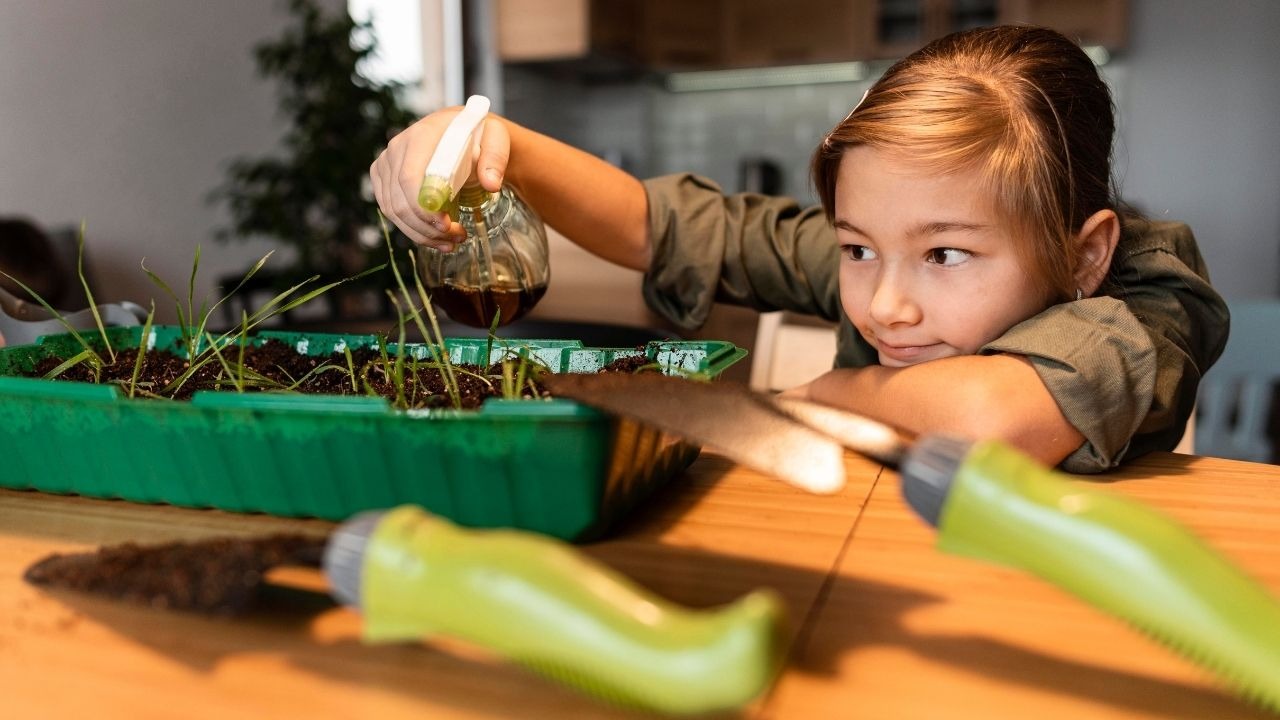
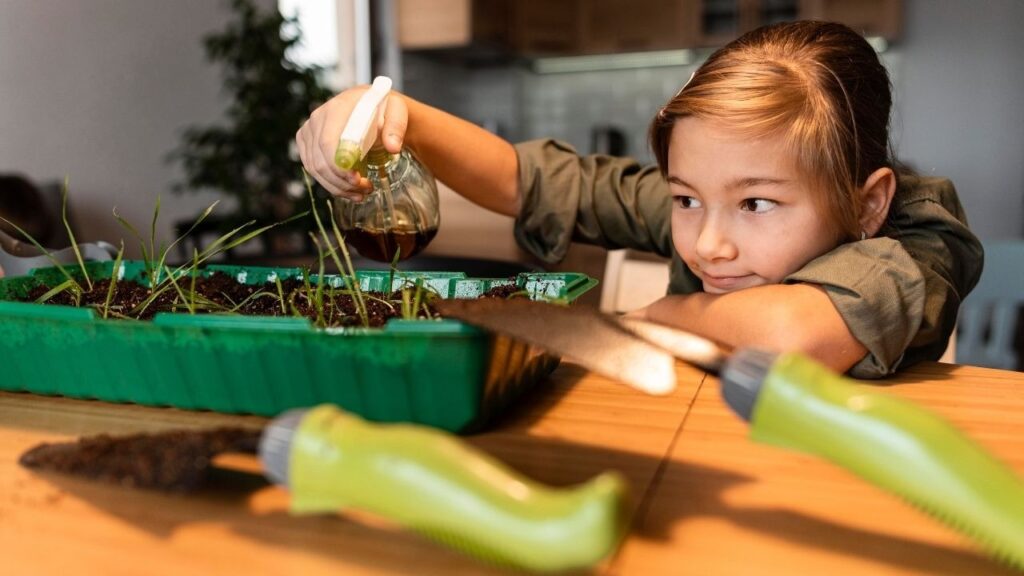
Plant seeds in small containers or a raised garden bed. Assign daily watering responsibilities and encourage children to sketch or photograph plant growth weekly. Growing edible plants like cherry tomatoes, basil, or lettuce directly connects children to the origins of their food, a concept the Food and Agriculture Organization of the United Nations (FAO) identifies as critical for building sustainable food awareness from a young age.
The Role of Educators and Parents as Green Role Models
Children do not learn sustainability from wall displays or educational videos alone. They absorb it by watching the adults closest to them make environmentally responsible choices day after day.
In the classroom, early childhood teachers can embed environmental themes into subjects they already teach. Counting seeds during math, reading picture books about ocean life during story time, or painting with plant based dyes during art class all reinforce eco awareness without requiring a separate curriculum block.
At home, parents can involve children in simple routines like sorting recyclables, selecting unpackaged produce at the grocery store, or switching off running taps. A 2022 study published in the journal Environmental Education Research found that children whose families actively practiced sustainable habits at home demonstrated measurably stronger environmental attitudes by age seven than peers without that reinforcement.
Communication between school and home amplifies results. When teachers share brief sustainability tips in weekly newsletters or suggest weekend nature activities, children receive consistent green messaging from both directions, which deepens internalization.
How to Build a Green Curriculum in Early Childhood Centers
A green curriculum places environmental responsibility at the center of an early learning program without replacing traditional subjects. Instead, it enriches literacy, math, science, and art with ecological context.
Elements found in effective green early years programs include:
Daily nature based outdoor time. A minimum of 30 minutes of unstructured outdoor play where children freely explore soil, water, insects, plants, and weather.
Sustainable classroom materials. Swapping single use craft supplies for recycled paper, natural clay, fabric offcuts, and found objects from nature reduces waste while teaching resourcefulness.
Purpose driven storytelling. Using children’s books with environmental themes, such as titles by Oliver Jeffers or Lynne Cherry, builds narrative comprehension and ecological vocabulary at the same time.
Community action projects. Park cleanups, tree planting events, and visits to local farms give children a sense of agency and demonstrate that collective effort produces real, visible change.
The Australian Government’s Belonging, Being and Becoming early childhood framework explicitly lists environmental responsibility as a learning outcome, making it a strong reference document for any center looking to formalize green programming.
The Montessori and Reggio Emilia Approach to Nature Based Learning
Two of the world’s most respected early childhood methodologies already place nature at the heart of education.
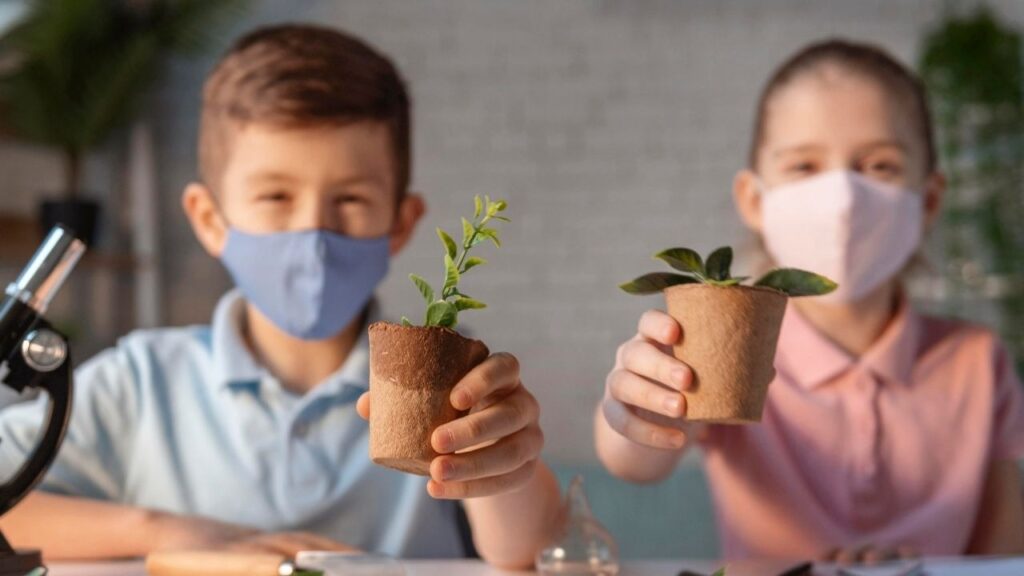
Montessori classrooms emphasize practical life skills and real world materials. Children care for classroom plants and animals, prepare food from gardens, and learn to clean and maintain their environment. This daily stewardship builds ecological responsibility organically.
The Reggio Emilia approach treats the natural environment as a “third teacher” alongside adults and peers. Children spend extended periods outdoors, document their observations through drawing and photography, and revisit natural phenomena across weeks or months. This deep, inquiry based engagement fosters the kind of emotional connection to nature that research links to lifelong environmental advocacy.
Both approaches align with UNESCO’s Global Action Programme on Education for Sustainable Development, which encourages child led, experiential learning as the most effective path to lasting ecological awareness.
Measuring the Impact of Sustainability Education on Young Learners
Tracking the effectiveness of eco education in early childhood does not require formal testing. Observable behavioral shifts appear within a few months of consistent exposure.
Common signs of growing environmental awareness include children reminding adults to switch off lights, voluntarily picking up litter during outdoor time, asking questions about where products or food come from, and demonstrating gentleness toward animals and plants.
The North American Association for Environmental Education (NAAEE) recommends that educators keep simple observation journals, noting instances of environmental language and behavior during play and conversation. These qualitative records offer meaningful, low pressure evidence of progress.
Overcoming Common Challenges in Early Childhood Sustainability Education
Educators and parents sometimes face barriers when trying to introduce green learning. Here are the most common obstacles and practical ways to address them.
Limited outdoor space. Even centers without gardens can use windowsill planters, indoor composting bins, and nature themed sensory trays filled with sand, leaves, and water.
Tight budgets. Sustainability education thrives on free and recycled materials. Egg cartons, cardboard tubes, donated fabric, and natural objects collected on walks cost nothing.
Lack of training. Organizations like the NAAEE and UNESCO offer free online toolkits and guidelines specifically designed for early childhood educators with no prior environmental training.
Parent skepticism. Sharing brief, evidence based updates about how green activities boost cognitive and social skills often converts hesitant families into enthusiastic supporters.
Topical Range: How Sustainability Connects to Broader Child Development
Sustainability in early childhood does not sit in its own silo. It intersects with every major developmental domain. Scientific inquiry strengthens cognitive growth. Teamwork during garden projects builds social emotional skills. Outdoor play supports gross motor development and physical health. Nature based art nurtures creativity and fine motor control.
Programs that treat environmental learning as a thread running through the entire curriculum, rather than an isolated enrichment topic, consistently see the strongest outcomes in holistic child development. This cross curricular integration is precisely what frameworks like Australia’s Belonging, Being and Becoming and UNESCO’s ESD guidelines advocate.
Conclusion
Sustainability in early childhood is not a passing classroom trend. It is a foundational investment in raising thoughtful, resourceful, and healthy human beings. When children build a connection with the natural world before age eight, those values become a permanent part of their identity.
Every strategy in this guide, from composting projects and seed planting to green curricula and nature walks, is accessible to any parent, caregiver, or educator regardless of budget or formal training. Consistency and personal example matter far more than expensive resources.
Pick one small action this week. Plant a seed with your child, start a kitchen compost bin, or spend 20 quiet minutes outside watching clouds and listening to birds. Then share what worked with another family or colleague. Lasting environmental change always begins with that kind of simple, human ripple.
At what age should children start learning about sustainability?
Children can begin absorbing basic sustainability concepts as early as age two through sensory nature play and simple habits like turning off running water. The period between ages three and six is especially receptive because curiosity about the natural world peaks during this developmental stage.
How do you explain sustainability to a three or four year old?
Use concrete, child friendly language such as “taking care of our Earth so animals, plants, and people can stay healthy.” Skip abstract terminology and instead demonstrate real actions like composting fruit peels, watering a plant, or reusing a container for a craft project.
What are the easiest sustainability activities for toddlers?
Toddlers respond well to collecting leaves and stones on nature walks, watering plants with small cups, sorting objects by material or color, and listening to picture books about animals, trees, and seasons. The key is keeping every activity sensory rich and hands on.
Why is outdoor play so important for environmental education?
Regular outdoor play builds an emotional bond between children and the natural environment. Multiple studies, including research endorsed by the American Academy of Pediatrics, show that children who spend consistent time outside develop stronger environmental attitudes and are more likely to protect natural spaces as adults.
Can sustainability fit into an existing daycare or preschool curriculum?
Yes. Leading early learning frameworks, including Australia’s national early childhood framework and UNESCO’s Education for Sustainable Development guidelines, specifically recommend integrating environmental responsibility into daily routines, free play, and structured learning for young children without requiring a separate subject block.
How can parents reinforce what children learn about sustainability at school?
Parents strengthen school based eco learning by practicing the same habits at home: recycling, conserving water, choosing reusable items, and reducing food waste. Casual conversations about nature during meals, car rides, or weekend outings further bridge the gap between classroom lessons and everyday life.