
The ability to read is the single most important academic skill a child will ever develop. Yet across the United States, reading proficiency remains alarmingly low and the roots of the problem trace back to the earliest years of life. Structured reading initiatives for young children address this crisis head-on by building the cognitive and linguistic foundations children need before they ever set foot in a classroom.
This guide explains what these programs involve, why they are so urgently needed, the different formats available to families, and how to select the right approach for your child.
Table of Contents

What Are Early Literacy Programs?
Early literacy programs are organized efforts that develop foundational reading, writing, and language abilities in children from birth through age eight. Rather than teaching toddlers to decode full sentences, these initiatives cultivate the underlying skills that make formal reading instruction possible: print awareness, phonological awareness, vocabulary development, narrative ability, and letter knowledge.
These initiatives operate across a wide range of settings homes, public libraries, preschools, childcare centers, and community organizations. Some are facilitated by trained educators, while others equip parents and caregivers with practical tools and techniques to embed reading development into everyday routines such as bedtime stories, mealtime conversations, and interactive play.
Why the First Five Years Are a Critical Window
The urgency behind early reading support stems from neuroscience. By age three, approximately 85 percent of a child’s brain architecture is already formed, yet formal schooling typically does not begin until age five or six. That two-to-three-year gap between peak brain development and school entry is precisely where structured reading support makes the greatest difference.
The consequences of inaction during this window are well-documented. A landmark study by the Annie E. Casey Foundation found that children who are not reading proficiently by the end of third grade are four times more likely to leave school without a diploma than their peers who read at grade level. When poverty compounds poor reading skills, dropout rates climb even higher six times greater than for all proficient readers.
The national data reinforces the scale of this challenge. According to the 2024 NAEP reading assessment, only 31 percent of fourth-grade students performed at or above the proficient level a two-point decline from 2022 and the continuation of a downward trend stretching back more than a decade. Forty percent of fourth graders now score below the basic reading level, the highest proportion in over two decades.
These numbers make one thing clear: waiting until kindergarten or first grade to address reading readiness is too late for millions of children.
Key Benefits of Investing in Reading Development Early
The advantages of structured reading support before formal schooling extend far beyond test scores.
Accelerated vocabulary and communication. Children who are read to regularly and engaged in rich conversations develop larger vocabularies at a faster rate. According to the National Center for Education Statistics, 85 percent of three-to-five-year-olds not yet in kindergarten were read to by a family member at least three times per week in 2019, and 96 percent were taught letters, words, or numbers at least once weekly home practices that directly fuel language growth.
Narrower achievement gaps. Research consistently shows that children from middle-income households are exposed to roughly 1,000 to 1,700 hours of one-on-one picture book reading before starting school, while children from low-income families average just 25 hours. Reading initiatives that provide free books, guided read-aloud sessions, and parent coaching help close this disparity before it calcifies into a permanent academic divide.
Stronger academic trajectories across all subjects. Children who arrive at kindergarten with solid pre-reading foundations consistently outperform their peers not only in language arts but in math, science, and social studies throughout elementary school.
Reduced contact with the justice system. The relationship between illiteracy and incarceration is stark. According to data compiled by the National Assessment of Adult Literacy and cited by the Department of Justice, 85 percent of juveniles who enter the court system are functionally illiterate, and over 70 percent of incarcerated adults read below a fourth-grade level. Investing in reading skills during early childhood is one of the most cost-effective ways to interrupt this pipeline.
Types of Reading Programs for Young Children
Not all reading initiatives follow the same model. They vary in setting, structure, and target audience, and understanding the main categories helps families and communities choose the best fit.
Home-Based Programs
Home-based approaches train parents and caregivers to integrate reading activities into daily routines guided read-aloud techniques, dialogic reading (where the child actively participates in storytelling), labeling household objects, and singing alphabet songs. Organizations such as Ferst Readers mail free, age-appropriate books to registered children every month from birth to age five, removing access as a barrier.
Library-Based Programs
Public libraries nationwide offer free storytime sessions, summer reading challenges, and family workshops designed around the Every Child Ready to Read framework, which centers on five evidence-based practices: talking, singing, reading, writing, and playing. The American Library Services for Children (ALSC) committee actively curates and disseminates current research on family reading development to strengthen these library-based offerings.
School-Based and Preschool Programs
Programs within formal educational settings particularly federally funded initiatives such as Head Start deliver structured reading instruction to children from low-income families starting as young as age three. The policy landscape supporting these programs is expanding rapidly: according to ExcelinEd in Action, fifteen states strengthened their reading instruction policies in 2024 alone, aligning curricula with the science of reading and mandating early screening to identify struggling readers before they fall behind. As of late 2024, 40 states plus the District of Columbia have passed laws or enacted policies related to evidence-based reading instruction.
Community and Nonprofit Programs
Nonprofit organizations fill gaps that schools and libraries cannot reach particularly in rural communities and underserved urban neighborhoods. Volunteer-driven tutoring, book distribution drives, and reading mentorship programs provide critical support where institutional resources are thin.
Evidence-Based Strategies That Drive Results
The most effective reading programs share a common foundation: they use teaching methods validated by decades of cognitive science and educational research.
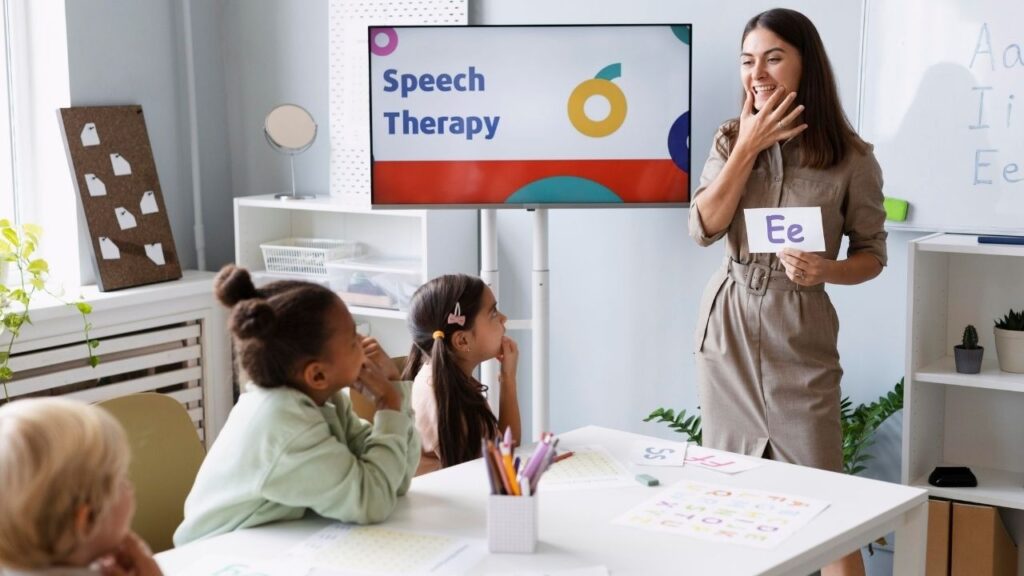
Phonological awareness training helps children recognize and manipulate the sounds in spoken language. Rhyming games, syllable-clapping activities, and exercises identifying beginning sounds build the auditory architecture that phonics instruction later depends on.
Dialogic reading transforms storytime from a passive experience into an active conversation. Instead of simply reading aloud, the adult pauses to ask open-ended questions “What do you think happens next?” or “Why does the character feel that way?” deepening comprehension and expanding vocabulary simultaneously.
Print-rich environments surround children with labels, signs, books, and written words so they internalize the concept that print carries meaning. Classrooms and homes featuring word walls, labeled containers, and accessible bookshelves foster print awareness organically.
Multisensory learning engages multiple neural pathways at once. Tracing letters in sand, forming words with magnetic tiles, and acting out story scenes reinforce literacy concepts through tactile, kinesthetic, visual, and auditory channels together.
How Technology Fits Into the Picture
Digital tools are increasingly part of the reading development landscape, though the research is clear that they function best as supplements to not substitutes for human-led interaction.
Apps focused on phonics and letter recognition, such as Khan Academy Kids, offer adaptive, engaging practice for young learners. Interactive e-books that highlight words as they are read aloud strengthen the connection between spoken and written language. The ALSC Early and Family Literacy Committee recommends that caregivers narrate their actions while using devices saying things like “I’m swiping to see the next page” and engage jointly with the child to turn screen time into shared learning time.
That said, the deepest gains in reading development still come from face-to-face conversations, physical books, and real-world storytelling. Technology becomes most powerful when an adult sits alongside a child and transforms a digital activity into an interactive, relational experience.
How to Choose the Right Program
Selecting the right approach depends on your child’s age, learning style, and your family’s daily routine. A few guiding principles will help you evaluate options effectively.
Prioritize evidence-based methods. Programs grounded in the science of reading teaching phonemic awareness, phonics, fluency, vocabulary, and comprehension in a structured, sequential manner consistently produce the strongest outcomes. Ask program leaders whether their curriculum aligns with current cognitive research on how children learn to decode and comprehend text.
Evaluate accessibility and consistency. A program only delivers results if your child can participate regularly. Library storytimes are free and flexible. School-based options like Head Start offer structured schedules but may have enrollment requirements. Home-based book delivery services demand minimal effort and keep fresh material arriving every month.
Choose interaction over passive consumption. Children learn more from a conversation about a picture book than from watching a reading video. Look for programs that emphasize dialogic reading, shared storytelling, and hands-on activities like drawing, letter tracing, and creative play.
What Parents Can Do at Home Starting Today
You do not need specialized training or an expensive curriculum to make a meaningful difference. Small, consistent habits woven into everyday life are often more powerful than any formal program.
Read aloud for at least fifteen minutes daily. Even with infants, hearing language patterns, intonation, and new vocabulary builds the neural pathways essential for later reading ability.
Narrate your world. Describe your grocery trip, talk through what you are cooking, and discuss what you observe on a walk. Research consistently shows that the volume of language a child hears from birth through age three is one of the strongest predictors of academic success at ages nine and ten.
Let your child choose the books. When children select stories that interest them, they stay engaged longer and learn to associate reading with pleasure rather than obligation.
Visit your local library regularly. Borrowing new books each week keeps reading material fresh and exciting at no cost. Many libraries also host free reading events that connect families with other readers in their community.
Sing songs and recite nursery rhymes. Music and rhyme are natural vehicles for phonological awareness one of the strongest predictors of future reading success.
Where This Topic Connects to Bigger Conversations
Reading development in young children does not exist in a vacuum. It intersects with early childhood education policy, school readiness assessments, the growing science of reading movement, family engagement research, digital literacy for young children, socioeconomic disparities in academic achievement, dyslexia and learning disability screening, bilingual and multilingual language development, and community-based education reform. Understanding these connected topics helps parents, educators, and policymakers build more comprehensive and effective support systems.
The Bottom Line
Early literacy programs represent one of the highest-return investments a family, school, or community can make in a child’s future. The evidence is consistent and unambiguous: children who build strong pre-reading skills before kindergarten perform better academically, graduate at higher rates, and encounter fewer barriers throughout their lives.
Whether you choose a home-based book delivery service, a library storytime series, or a structured preschool curriculum, the essential principle is the same start early and stay consistent. Reading, talking, singing, and playing with your child every day creates a foundation that formal schooling builds upon for years to come.
At what age should reading development efforts begin?
From birth. Initiatives that introduce read-alouds, songs, and verbal interaction with infants align with research showing that brain development and language acquisition are most rapid during the first three years of life.
What are the five foundational components of early reading readiness?
Print awareness, phonological awareness, vocabulary, narrative skills, and letter knowledge. Together, these prepare children to transition smoothly into formal reading instruction at school entry.
Are these programs only for children who are falling behind?
Not at all. Children at every developmental level benefit from consistent reading engagement. Those developing on track gain richer vocabularies, stronger comprehension, and a deeper relationship with books.
How do reading programs support low-income families?
Many provide free books, caregiver training, and community resources specifically designed to close the opportunity gap. By removing cost and access as barriers, these initiatives ensure that household income does not dictate a child’s reading readiness.
Can parents support reading development without enrolling in a formal program?
Absolutely. Daily read-alouds, rich conversations, singing, and regular library visits are all proven strategies that require no formal training. In the earliest years, consistency matters far more than structure.
What is the science of reading?
It is a body of interdisciplinary research spanning decades that explains how the brain learns to decode and comprehend written language. Programs built on this research teach phonemic awareness, phonics, and language comprehension systematically, producing stronger and more durable reading outcomes. As of 2024,over 40 states have enacted policies aligned with these findings.