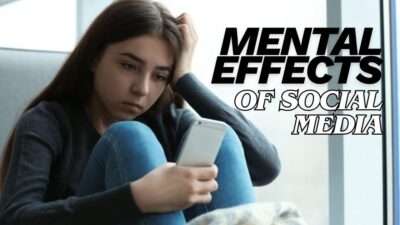
TikTok and anxiety have become one of the most actively researched connections in modern mental health science. The platform now serves over 2 billion monthly active users globally, and the average person spends close to an hour each day watching short form videos. With that level of engagement, researchers worldwide are asking a critical question: is all that scrolling making us more anxious?
The answer is nuanced. A growing number of peer reviewed studies show a clear association between compulsive, heavy platform use and increased anxiety symptoms, particularly among younger audiences. But casual, mindful engagement does not carry the same risk. Below is a thorough breakdown of what the latest science reveals, who faces the greatest risks, and what you can do to protect your mental wellbeing.
Table of Contents

What Does the Latest Research Say?
Several major studies now confirm a statistically meaningful link between excessive short form video consumption and heightened anxiety levels.
A 2025 systematic review published in SAGE Journals and indexed in PMC examined 26 empirical studies involving more than 11,400 participants. The authors concluded that frequent, compulsive engagement with the platform was consistently associated with rising symptoms of both anxiety and depression. Users younger than 24 showed the strongest effects.
Separately, a 2025 meta analysis published in AIMS Public Health reviewed 16 studies covering nearly 16,000 individuals. Using random effects models, the researchers identified a strong positive correlation between problematic usage and anxiety. The same analysis uncovered parallel links to depression, disturbed sleep, body image dissatisfaction, and chronic stress.
These results align with what therapists and counselors are observing in clinical settings: the more compulsively someone scrolls, the more likely they are to report persistent anxious feelings. However, people who use the app with intention and moderation show a very different mental health profile.
Why Does This Platform Trigger More Worry Than Older Apps?
The architecture of TikTok is fundamentally different from legacy social networks, and those design choices directly shape how the app influences your emotional state.
The algorithm maps your emotional responses. Most older platforms show content from people you actively follow. TikTok’s For You Page, by contrast, curates a personalized feed driven entirely by behavioral signals. Every pause, replay, and swipe teaches the system what captivates your attention, regardless of whether that content supports your wellbeing.
Natural exit points are deliberately removed. Instagram stories eventually end. YouTube videos reach a conclusion. TikTok’s autoplay and infinite scroll eliminate every moment of friction that might encourage you to set down your phone. The next clip begins before you have consciously chosen to continue watching.
Social comparison happens at high speed. Short form video delivers a compressed stream of polished lifestyles, bodies, careers, and achievements. Researchers have long identified social comparison as a primary driver of online anxiety, and TikTok’s format accelerates this process by packing dozens of comparisons into just a few minutes of viewing.
Passive watching dominates active participation. A 2025 longitudinal study conducted at Beijing Normal University found that passive consumption (scrolling without commenting, creating, or sharing) was more strongly linked to anxiety in young adults than active engagement. The researchers suggested that watching without participating may weaken a person’s sense of identity clarity, which fuels anxious thinking over time.
Who Faces the Greatest Risk?
Not everyone is equally affected by compulsive scrolling. Research highlights specific groups that are more vulnerable.
Teenagers and adolescents sit at the top of the risk spectrum. A 2025 cross sectional study of Greek adolescents published in Pediatric Reports found that higher scores on the TikTok Addiction Scale were directly tied to elevated anxiety and depression. Female participants in the study reported both heavier daily usage and more intense symptoms compared to male participants.
Young adults between 18 and 24 represent the platform’s most engaged demographic. Multiple usage analyses confirm this age group logs the highest average daily screen time. The 2025 PMC systematic review specifically noted that mental health effects were most pronounced among users under 24.
Individuals with preexisting mental health conditions may find their symptoms amplified. The platform’s recommendation engine can create self reinforcing loops: a user who engages with anxiety related content starts receiving significantly more of it, potentially deepening distress rather than offering relief.
People who rely on the app as a primary emotional coping tool also face elevated risk. Reaching for your phone during every moment of boredom or stress creates a cycle where short term distraction replaces healthier long term strategies, all while introducing fresh sources of comparison and overstimulation.
How Much Screen Time Crosses the Line?
There is no single clinical threshold, but researchers have identified behavioral patterns that distinguish casual viewers from compulsive users.
According to various platform analyses, the typical user spends roughly 34 hours per month on the app and opens it approximately 19 times per day, with an average session lasting close to 11 minutes. American teenagers clock even higher numbers, with some reports estimating around 87 minutes daily.
Mental health professionals generally flag the following warning signs:
Feeling restless, irritable, or anxious whenever you cannot access the app.
Routinely losing track of time and scrolling far longer than you originally planned.
Noticing that your usage is eating into sleep, schoolwork, job performance, or real world relationships.
Automatically opening the app during any moment of discomfort, boredom, or stress without making a deliberate choice.
Consistently feeling worse about yourself after a scrolling session rather than better.
The critical factor is not the raw number of minutes but the quality and intentionality behind that time. Thirty minutes spent actively engaging with content you genuinely enjoy produces a very different outcome than thirty minutes of aimless, emotion driven scrolling.
The Dopamine Loop: Why Your Brain Keeps Asking for More
The platform’s ability to amplify worry is deeply connected to how it interacts with your neurological reward system. Each short video delivers a small burst of dopamine, the brain chemical responsible for pleasure and motivation. Because clips are brief and unpredictable, your brain remains in a heightened state of anticipation, never knowing when the next satisfying moment will arrive.
This pattern mirrors what behavioral scientists call a variable reward schedule, the same mechanism that makes gambling so addictive. You swipe past several unremarkable videos, then suddenly land on one that sparks laughter or curiosity. That sporadic payoff keeps you reaching for the next clip.
With repeated exposure, this cycle can reduce your brain’s baseline sensitivity to dopamine. Everyday activities that once felt satisfying, such as reading a book, going for a walk, or having a meaningful conversation, begin to feel flat by comparison. A 2025 review published in Cureus and indexed in PMC explained that frequent social media engagement reshapes dopamine pathways in ways that mirror behavioral addiction, especially in adolescents whose prefrontal cortex is still maturing.
The outcome is a self sustaining loop: you feel anxious or restless, so you open the app for quick relief. The momentary distraction provides a brief mood lift but leaves you more depleted when you stop, which pulls you right back to the screen.
How Mental Health Content on the Platform Can Backfire
Hashtags like #anxiety, #mental health, and #therapy to collectively attract billions of views. For many users, this content feels validating, relatable, and even therapeutic at first glance.
Yet research reveals significant downsides. A 2024 study in the Journal of Adolescent Health examined 100 high engagement videos about depression and anxiety, each with at least one million views. The findings showed that personal experience videos attracted far more viewer interaction than clips from licensed healthcare professionals. While sharing personal stories can reduce stigma, these videos frequently describe symptoms in vague or overgeneralized terms that may push viewers toward inaccurate self diagnosis.
A December 2025 investigation by The Washington Post added another concerning dimension. Their analysis of nearly 900 user viewing histories found that the recommendation algorithm treats mental health content as unusually “sticky.” After watching just one mental health video, users need to skip approximately two similar videos to counteract the algorithmic nudge. For topics like politics or animals, a single skip is usually enough to rebalance the feed.
The practical consequence is significant. A young person who watches one video about panic attacks may quickly find their entire feed saturated with content about intrusive thoughts, depressive episodes, and worst case scenarios. Instead of offering comfort, this echo chamber can magnify the very feelings the viewer was hoping to ease.

Practical Strategies to Protect Your Wellbeing
Addressing TikTok and anxiety does not necessarily require deleting the app altogether. Targeted, deliberate adjustments can meaningfully reshape your experience.
Establish clear daily time limits. Use the platform’s built in screen time dashboard or your device’s app timer to set a firm cap. Even trimming 15 to 20 minutes of daily scrolling can produce noticeable improvements in mood and focus.
Shift from watching to participating. Rather than passively consuming the For You Page, try creating your own content, leaving thoughtful comments, or intentionally following accounts that offer genuine value. Studies consistently show that active social media engagement supports better mental health outcomes than silent scrolling.
Designate phone free spaces and hours. Remove the app from your bedroom and keep devices away during meals. Setting a “no screens” boundary for the first and last 30 minutes of your day helps safeguard sleep quality and morning clarity.
Deliberately retrain your feed. When a video leaves you feeling anxious or inadequate, long press it and select “Not Interested.” Actively seek out and engage with creators who educate, inspire, or make you laugh without triggering comparison.
Interrupt the automatic habit loop. The next time you reach for your phone out of boredom or discomfort, pause and try a brief substitute activity first: a five minute walk, a few slow breaths, or a quick text to a friend. Each time you successfully interrupt the reflex, you weaken its hold.
Conclusion: Balance Is the Real Goal
The link between TikTok and anxiety is well supported by research, but it is not a foregone conclusion for every user. The platform is not inherently destructive. What truly determines its impact is the amount of time you invest, the type of content that fills your feed, and whether your scrolling is a conscious decision or an automatic compulsion.
Findings from multiple 2025 studies deliver a consistent message: excessive, uncontrolled usage carries real and measurable mental health consequences, particularly for adolescents and young adults. At the same time, thoughtful, bounded engagement can coexist with strong emotional wellbeing.
The single most valuable step you can take is genuine self awareness. Notice how you feel before you pick up your phone, during your scrolling sessions, and after you put the device down. If the app consistently leaves you more worried than when you started, that pattern deserves your attention and action.
If this article gave you useful perspective, share it with a friend or family member who might benefit. And if you have personal strategies for maintaining healthy screen habits, leave them in the comments below. Your experience might be exactly what someone else needs to hear.
Does TikTok directly cause anxiety?
Most current studies identify a strong association rather than direct causation, because the majority of research uses cross sectional designs. What the evidence does show clearly is that compulsive, excessive use can significantly worsen anxiety, especially in people who are already predisposed to mental health challenges.
How many minutes of daily use is considered unhealthy?
No official clinical cutoff exists, but most mental health professionals suggest keeping total social media time below one to two hours per day. If your scrolling regularly disrupts sleep, work, or relationships, or if you consistently feel emotionally drained afterward, those are strong signals to reduce your usage.
Is this platform more harmful than Instagram or Facebook?
Research suggests that the infinite scroll design and hyper personalized algorithm create stronger habit forming patterns than most competing platforms. The 2025 AIMS Public Health meta analysis found a particularly robust positive correlation between compulsive short form video use and anxiety compared to broader social media studies.
Can mental health content on TikTok actually be helpful?
It can, within limits. Many users credit platform content with helping them recognize symptoms and motivating them to seek professional support. The risk emerges when viewers treat unverified personal anecdotes as medical guidance or when the algorithm traps them in an echo chamber of distressing content.
Which age group faces the highest risk from short form video related anxiety?
Adolescents and young adults under 24 are consistently identified as the most vulnerable population across multiple studies. This group represents the platform’s heaviest users and is at a developmental stage where the brain’s reward system is especially responsive to dopamine driven stimulation.
What practical steps can parents take?
Setting firm, age appropriate screen time boundaries is the most commonly recommended approach, particularly for users under 16. The platform’s Family Pairing feature allows guardians to manage daily limits, control messaging access, and filter content categories. Research also shows that open, nonjudgmental conversations about digital habits tend to produce better long term results than blanket bans.