SEO has never been more important or more complicated at the same time. Businesses now need to rank on traditional Google search, earn citations inside AI-generated answers, build authority across platforms like ChatGPT, Gemini, and Perplexity, manage technical health, produce depth-driven content, and track metrics that did not exist 18 months ago. The complexity has exploded.
Table of Contents
Yet 74 percent of small businesses plan to invest in SEO this year. They recognize the opportunity. What most of them cannot afford is the traditional way of capturing it hiring a specialist agency at $3,000 to $10,000 per month, waiting weeks for reports, and having limited visibility into what is actually being done on their behalf.
This tension between rising importance and rising complexity is exactly why self-service SEO dashboards are emerging as the defining technology trend in digital marketing for 2026. These platforms put analysis, execution, and tracking into a single interface that any marketer can operate with no agency dependency, no specialist knowledge required, no opaque pricing. They represent the same kind of shift that Shopify brought to e-commerce, Canva brought to design, and Mailchimp brought to email marketing.
This article explains how we got here, what makes these dashboards different from the SEO tools that came before, and why the self-service model is likely to become the default way businesses manage search optimization going forward.
The Three Eras of SEO Tooling
Understanding where self-service dashboards came from requires understanding the tooling landscape they are replacing. The evolution breaks cleanly into three eras, each defined by what marketers could do on their own versus what required outside help.
Era 1: Manual (2005–2012)
In the early days of SEO, almost everything was manual. Marketers checked rankings by typing queries into Google and scrolling through results. Link building meant sending individual emails to website owners. Technical audits meant right-clicking “View Source” and reading raw HTML. Content optimization meant guessing which keywords to use based on intuition and competitor observation.
The tools that existed were primitive basic rank checkers, simple backlink counters, keyword density analyzers. None of them connected to each other. Data lived in spreadsheets. There was no centralized view of SEO performance and no way to take action from within a tool. Everything required manual effort at every step.
Era 2: Data Platforms (2012–2020)
The second era began when companies like Moz, Ahrefs, and SEMrush built large-scale web crawling infrastructure and made the resulting data available through sophisticated interfaces. For the first time, marketers could programmatically evaluate any domain’s authority, analyze complete backlink profiles, identify keyword gaps, audit technical issues, and track rankings across thousands of queries.
This was transformative for insight generation. But there was a critical limitation: these platforms told you what to do without giving you the ability to do it. They could show that you needed more backlinks from high-authority sites, but you still had to find those sites, contact them, negotiate placements, and manage the entire process outside the platform. The gap between knowing and doing remained wide, and that gap was filled by agencies.
Era 3: Self-Service Execution (2020–Present)
The third era we are living through now closes that gap. Self-service SEO dashboards combine data analysis, execution, and tracking into unified interfaces. You do not just see that your site needs backlinks, you order them from the same screen. You do not just learn that your schema markup is broken, you fix it through the platform. You do not just discover that your content is underperforming, you optimize it with AI-powered recommendations and publish the changes directly.
The shift from “insight tool” to “execution platform” mirrors a broader pattern across SaaS. According to industry data, 86 percent of marketing professionals now use AI SEO tools, with execution automation ranked among their top three use cases. The market is clearly moving toward platforms that let marketers act, not just analyze.
What Makes a Dashboard “Self-Service”
The term “self-service” gets used loosely in marketing technology. For SEO dashboards specifically, five characteristics distinguish genuinely self-service platforms from traditional tools that simply have nice interfaces.
Unified workflow. A self-service dashboard handles the entire lifecycle of an SEO task within one interface from identifying what needs to be done, through executing the action, to tracking the result. You never need to export data into a spreadsheet, switch to an email client, or log into a separate tool to complete the job.
No middleman. The defining feature of self-service is that the user takes action directly. There is no account manager, no ticket system, no waiting for a specialist to implement your request. If you want to order a backlink, optimize a page, or run a technical audit, you initiate it yourself from the dashboard.
Real-time tracking. Every action taken through the platform is tracked and displayed in real time. For link building, this means seeing each placement move through stages ordered, content in progress, published, live and indexed with metrics like domain authority and referring domains visible at every step. For technical audits, this means watching issues get resolved and scores update as fixes are deployed.
Transparent pricing. Self-service platforms display costs before you commit. There are no hidden fees, no “contact us for a quote” walls, and no invoices that arrive weeks later with unexpected line items. Payment processing is integrated, typically through providers like Stripe, so checkout takes seconds rather than days of negotiation.
Accessible to non-specialists. Perhaps most importantly, self-service dashboards are designed for business owners and generalist marketers, not just SEO experts. The interface abstracts away technical complexity; you do not need to understand the difference between a 301 and a 302 redirect to fix a broken link. The platform guides you through what matters and handles the technical details.
Self-Service Link Building: Where the Model Is Most Mature
Of all SEO functions, link building is where self-service dashboards have made the deepest impact. This makes sense because traditional link building was the most painful, expensive, and opaque part of the entire SEO process.
The conventional approach required identifying potential link sources through manual research, evaluating each site’s authority and relevance, finding contact information for editors or webmasters, drafting personalized outreach emails, following up multiple times, negotiating terms and pricing, waiting weeks for content creation and publication, and then manually verifying that the link went live with the correct anchor text and target URL. A single successful placement could easily take three to six weeks and involve dozens of emails.
Modern digital marketing technology platforms have collapsed this entire workflow into dashboard-based ordering. Marketers select link grades, add target URLs, specify niches, pay securely through integrated payment processing, and track every placement live domain authority, referring domains, anchor text, and published URL from a single screen. The publisher matching, content creation, and quality verification all happen within the platform’s automated workflow.
The self-service link building dashboard model has gained particular traction because it addresses the three biggest pain points of traditional link building simultaneously. Opaque pricing gets replaced by transparent per-link costs industry data shows that a single guest post on a site with Domain Rating 71 to 80 now averages around $1,008 through traditional agency channels, while dashboard-based platforms offer comparable placements at substantially lower price points because they have automated the operational overhead. Weeks-long agency timelines get replaced by same-day order initiation, because publisher matching and content workflows are already systematized. And hope-based tracking gets replaced by real-time visibility into every metric that matters.
The technology underpinning these platforms is increasingly sophisticated. According to recent industry data, 83 percent of link building platforms now use AI for advanced link quality assessment, filtering out spam networks and low-quality sites before a marketer ever sees them. And 52 percent of digital marketers use AI-based predictive analytics to prioritize which link targets will generate the greatest SEO impact. These capabilities machine learning for quality scoring, NLP for relevance matching, predictive models for outreach success all operate behind the scenes while the marketer interacts with a clean, simple dashboard interface.
For small businesses and independent marketers who represent the majority of the market, this combination of lower cost, higher transparency, and faster delivery has made professional-grade link building accessible for the first time.
Self-Service Technical Audits and On-Page Optimization
Link building is the most mature self-service SEO function, but the model is expanding rapidly into other areas.
Technical SEO Audits
Traditional technical audits required hiring a specialist to crawl your site, identify issues, compile a report, and then explain what needed fixing. The audit itself could cost thousands of dollars, and implementation required a separate engagement with a developer.
Self-service dashboards now automate this entire cycle. They continuously crawl your site, flag technical issues in real time broken links, missing schema markup, slow-loading pages, crawl errors, mobile usability problems and provide guided fixes that non-technical users can implement directly. Some platforms integrate with content management systems like WordPress to push fixes live without requiring a developer at all.
The scope of these audits is expanding too. As AI-powered search grows in importance, forward-thinking platforms are adding what one industry expert calls “AI comprehension dashboards” tools that evaluate how well your content is structured for extraction by large language models. These assess paragraph extractability (the Island Test), schema completeness, entity density, and whether your content is formatted in clean HTML that AI crawlers can parse efficiently. This is a measurement category that did not exist 18 months ago and is now becoming a competitive differentiator.
On-Page Content Optimization
Content optimization dashboards analyze your existing pages against top-ranking competitors and AI citation sources, then provide specific recommendations, add this subtopic, expand this section, restructure this paragraph for better extractability, FAQ schema here. The most advanced platforms score content in real time as you edit, showing how changes affect your optimization score before you publish.
The common thread across all of these functions is the same: the dashboard eliminates the gap between knowing what to do and being able to do it. Analysis and execution happen in the same interface, operated by the same person, without requiring outside expertise.
The AI Visibility Layer: Measuring What Did Not Exist Before
Perhaps the most exciting frontier for self-service SEO dashboards is the integration of AI visibility tracking a metric category that is brand new and evolving rapidly.
Traditional SEO measurement focused on rankings, organic traffic, impressions, and click-through rates. These metrics remain important, but they now tell less than half the story. With 48 percent of Google searches triggering AI Overviews, 93 percent of AI Mode sessions ending without a click, and AI search traffic growing 527 percent year-over-year, marketers need visibility into an entirely new set of performance indicators.
Self-service dashboards are beginning to integrate these metrics alongside traditional ones. The key AI visibility data points emerging in 2026 dashboards include AI citation frequency and how often your brand or content is referenced in AI-generated answers across ChatGPT, Gemini, Perplexity, and Google AI Overviews. Brand mentions whether AI systems characterize your brand positively, neutrally, or negatively when they reference it.
AI Overview appearance rates what percentage of your target keywords trigger AI Overviews and whether your content is cited within them. GEO scores a composite measure of how well your content is optimized for generative engine citation. And AI referral traffic and conversion tracking visitors who arrive from AI platforms separately from traditional organic traffic and measuring their conversion rates.
According to a HubSpot survey, 67 percent of digital marketers say tracking GEO performance is more complex than traditional SEO tracking. And a McKinsey study found that only 16 percent of brands systematically track AI search performance at all. Self-service dashboards are closing this gap by making AI visibility measurement accessible to the same marketers who already track rankings and traffic, no additional tools, no specialist analysts, no separate reporting workflows.
The integration of traditional and AI metrics into a single dashboard view is particularly powerful because it reveals correlations that are invisible when the data lives in separate systems. A marketer can see, for example, that a link building campaign improved both their organic ranking and their AI citation frequency connecting investment to outcome across both tracks of modern search.
Why Self-Service Wins: The Economics and Access Argument
The shift toward self-service SEO dashboards is not just a technology trend. It is an economics story about who gets to participate in search optimization.
The traditional agency model has a structural accessibility problem. Quality SEO agencies charge $3,000 to $10,000 per month for retainer engagements. For enterprise businesses, this is a rounding error. For the 74 percent of small businesses that plan to invest in SEO, it is often prohibitively expensive especially when results take six to twelve months to materialize.
Self-service dashboards fundamentally change the economics by shifting from retainer-based pricing to action-based pricing. Instead of paying $5,000 per month for an agency that allocates some unknown portion of their time to your account, you pay per link built, per audit completed, per page optimized. You know exactly what you are getting, exactly what it costs, and exactly when it will be delivered.
This mirrors a pattern seen across every category of business software that has been disrupted by self-service platforms. Before Shopify, launching an e-commerce store required hiring a web development agency. Before Canva, creating professional marketing materials required a graphic designer. Before Mailchimp, running email campaigns required a marketing automation specialist. In each case, a self-service platform made the capability accessible to businesses that could not previously afford it, while delivering results that were comparable and in many cases superior to the traditional approach.
SEO is following the same trajectory. The technology is mature enough. The AI capabilities are sophisticated enough. The interfaces are accessible enough. The only thing that was missing was the execution layer the ability to go from “here is what your site needs” to “done” within the same platform. That layer is now being built, and the businesses that adopt it earliest will capture a significant competitive advantage.
What Is Coming Next
Self-service SEO dashboards are still in their early innings. Several trends point to where the technology is heading.
AI agents inside dashboards. The next evolution is AI agents that do not just recommend actions but execute them autonomously within defined guardrails. Imagine a dashboard where you set goals “improve AI citation rate for these ten keywords by 20 percent” and the agent continuously adjusts your content, link building targets, and technical configurations to reach that goal without requiring manual intervention at each step.
Cross-platform unified dashboards. Current dashboards tend to focus on one or two SEO functions. The future is a single interface that manages Google rankings, AI search citations, social discovery optimization, technical health, content performance, and link authority simultaneously. The marketer sees one integrated view of their total search visibility, not fragmented reports from five different tools.
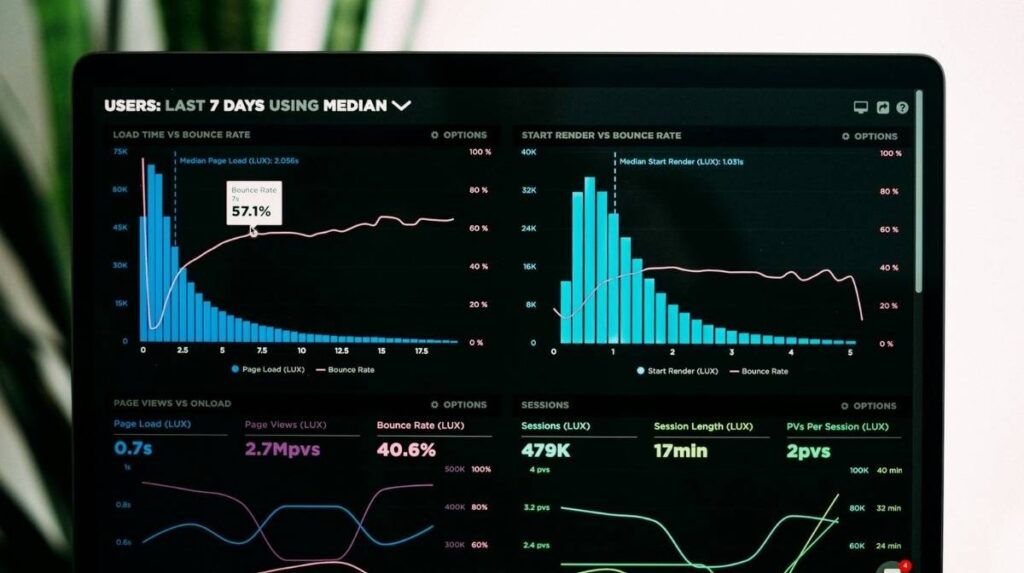
Predictive dashboards. Today’s dashboards show you what is happening now and what happened in the past. Tomorrow’s dashboards will forecast what is likely to happen predicting ranking movements before they occur, identifying AI citation opportunities before competitors act on them, and recommending preemptive actions based on pattern recognition across thousands of similar sites.
Voice and conversational interfaces. As AI assistants become more capable, the dashboard interaction model itself will evolve. Instead of clicking through menus, marketers will describe what they want in natural language “show me which pages lost AI citations this month and suggest fixes” and the dashboard will respond with analysis, recommendations, and executable action plans.
What is a self-service SEO dashboard?
A self-service SEO dashboard is a web-based platform that combines SEO analysis, execution, and tracking into a single interface. Unlike traditional SEO tools that only show you data, self-service dashboards let you take action directly ordering backlinks, running technical audits, optimizing content, and tracking results without hiring an agency or specialist. They are designed to be accessible to business owners and generalist marketers, not just SEO experts.
How is a self-service dashboard different from traditional SEO tools?
Traditional SEO tools like Ahrefs or SEMrush are primarily data platforms they show you metrics, identify opportunities, and highlight problems, but execution still happens outside the tool. Self-service dashboards close the gap between knowing and doing. You identify an issue and resolve it from the same screen. They also include integrated payment, real-time status tracking, and guided workflows that make the process accessible to non-specialists.
Can small businesses use self-service SEO dashboards without expertise?
Yes. This is one of the primary advantages of the self-service model. These platforms are designed to abstract away technical complexity and guide users through what matters. You do not need to understand the technical details of schema markup or anchor text distribution the dashboard handles that complexity and presents clear, actionable options. The learning curve is comparable to using Canva for design or Shopify for e-commerce.
What features should I look for in an SEO dashboard?
Prioritize platforms that offer unified workflow across analysis and execution, real-time tracking with transparent metrics, integrated payment with clear per-action pricing, AI visibility tracking alongside traditional rank monitoring, and quality controls like automated domain authority checks and relevance matching for link building. The best dashboards also include AI-powered recommendations that help you prioritize which actions will have the highest impact.
Are self-service link building dashboards safe and effective?
When built with proper quality controls, yes. The best platforms use AI-powered quality assessment 83 percent of link building platforms now use machine learning for link quality scoring to filter out spam and low-quality sites automatically. They optimize anchor text distribution to prevent over-optimization penalties and provide continuous monitoring to flag toxic backlinks. The key is choosing platforms that prioritize transparency, showing you exactly where each link is placed and what metrics it carries.