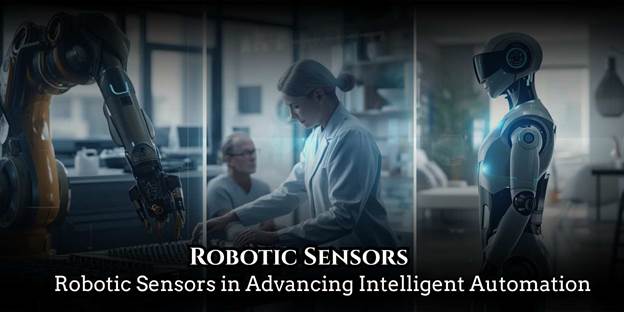
Machine vision is a branch of technology that equips industrial equipment and computers with the ability to capture visual information, interpret it through specialized algorithms, and respond with automated decisions all without requiring a human operator to watch the screen. It functions as a digital set of eyes paired with an analytical brain, enabling machines to inspect products, detect flaws, guide robotic arms, and measure components at speeds and accuracy levels that manual inspection simply cannot match.
This technology sits at the intersection of imaging hardware, processing software, and artificial intelligence. While the concept has existed in various forms since the 1970s, recent breakthroughs in deep learning and sensor design have transformed machine vision from a niche laboratory tool into a cornerstone of modern manufacturing, logistics, healthcare, and agriculture.
The commercial significance of this field is enormous. According to Grand View Research, the global machine vision market reached an estimated USD 20.4 billion in 2024 and is projected to climb to USD 41.7 billion by 2030, expanding at a compound annual growth rate of 13%. Separately, MarketsandMarkets reports that demand is being fueled primarily by advancements in automation, Industry 4.0 initiatives, and the integration of AI-powered analytics into visual inspection workflows.
Table of Contents

What Exactly Is Machine Vision?
Machine vision refers to the engineered capability of automated systems to acquire images from their environment, process that visual data through algorithms, and execute decisions based on the analysis typically within milliseconds. It gives machines the functional equivalent of sight, tailored specifically for structured, high-speed tasks like quality inspection, measurement, and object identification.
Unlike human eyesight, which tires, drifts, and fluctuates depending on attention and fatigue, machine vision operates continuously with near-zero variation. A 2025 peer-reviewed paper published in MDPI Technologies emphasized that this consistency is what makes automated visual inspection indispensable across manufacturing human inspectors are inherently susceptible to fatigue-driven errors, while machine vision systems maintain identical precision across thousands of consecutive evaluations.
The technology is deployed wherever visual judgment needs to happen rapidly and reliably. Assembly lines use it to verify that every component is correctly placed. Pharmaceutical packaging facilities rely on it to confirm that labels are accurate and barcodes are readable. Logistics warehouses integrate it into sorting systems that route parcels based on visual identification. Its reach extends well beyond the factory floor.
Machine Vision vs. Computer Vision Are They the Same?
These two terms are closely related but serve different purposes. Machine vision is an applied engineering discipline focused on using visual data to solve specific industrial tasks inspecting, measuring, guiding, and sorting within controlled environments. Computer vision is the broader academic and scientific field concerned with teaching machines to interpret any visual information from any environment.
Here is a straightforward way to distinguish them:
| Feature | Machine Vision | Computer Vision |
| Primary focus | Industrial automation and inspection | General visual understanding and interpretation |
| Environment | Controlled (factory floors, production lines) | Uncontrolled (outdoor scenes, varied conditions) |
| Hardware dependency | High relies on specialized cameras, lighting, sensors | Variable can work with standard cameras and devices |
| Typical output | Pass/fail decisions, measurements, robotic guidance | Object recognition, scene analysis, behavior prediction |
| Key industries | Manufacturing, packaging, pharmaceuticals, electronics | Healthcare, autonomous vehicles, security, social media |
In practical terms, machine vision borrows algorithms and techniques from computer vision, packages them with purpose-built hardware, and deploys the result in environments where speed, repeatability, and precision are non-negotiable. Think of computer vision as the scientific parent and machine vision as the industrial offspring built for real-world production demands.
Core Components of a Machine Vision System
Every functional machine vision system is assembled from five essential building blocks: lighting, optics, an imaging sensor, a processing unit, and specialized software. Each component plays a distinct role, and weakness in any single element degrades the entire system’s output.
Lighting
Controlled illumination is arguably the most underappreciated component. Without consistent, purpose-designed lighting, even the most advanced camera produces images that are unusable for reliable analysis. Different inspection tasks call for different lighting configurations backlighting silhouettes objects to reveal edge profiles, while ring lighting eliminates shadows on flat surfaces. The goal is always to maximize contrast between the feature being inspected and its surrounding background.
Cameras and Imaging Sensors
Industrial machine vision predominantly uses either CCD (charge-coupled device) or CMOS (complementary metal-oxide-semiconductor) sensors to convert light into electronic signals. Camera selection depends on the specific application area scan cameras capture full two-dimensional frames in a single exposure, while line scan cameras build images progressively as objects pass beneath them on a conveyor, making them ideal for continuous inspection of high-speed production lines.
Optics and Lenses
Lenses determine the field of view, working distance, and depth of field for every captured image. Selecting the wrong lens means the system either misses critical detail or wastes processing power analyzing irrelevant visual data. Telecentric lenses, for instance, are specifically engineered for measurement applications because they eliminate perspective distortion that standard lenses introduce.
Processing Hardware
Once an image is captured, it needs to be analyzed and that requires dedicated processing power. PC-based systems dominate the market currently, valued for their flexibility and ability to run complex AI-driven algorithms. According to Grand View Research, the hardware segment accounted for over 61% of total machine vision market revenue in 2024. However, smart camera systems which embed the processor directly inside the camera housing are growing rapidly because they simplify installation and reduce integration costs for less complex tasks.
Software and Algorithms
Software is the intelligence layer that transforms raw pixel data into actionable conclusions. Traditional machine vision software relies on rules-based algorithms edge detection, pattern matching, blob analysis, and template comparison. Modern systems increasingly layer deep learning models on top of these classical techniques, enabling the system to identify defects, objects, and anomalies it was never explicitly programmed to recognize. MarketsandMarkets identifies AI-based machine vision software as the fastest-growing component segment, reflecting this ongoing shift from rigid programming to adaptive intelligence.
How Does Machine Vision Work? A Step-by-Step Breakdown
A machine vision system operates through a sequential pipeline: image acquisition, preprocessing, feature extraction, analysis, and decision output. Each stage feeds directly into the next, and the entire cycle often completes in milliseconds.
Here is how each stage functions in practice:
- Image Acquisition The camera or sensor captures a visual snapshot of the object or scene under inspection. Lighting conditions are tightly controlled to ensure maximum contrast and consistency across every single frame.
- Preprocessing The raw image rarely arrives in perfect condition. Preprocessing cleans up the data by reducing noise, correcting uneven illumination, sharpening edges, and adjusting contrast so the meaningful features stand out more clearly for the next stage.
- Feature Extraction The software identifies and isolates specific visual characteristics within the preprocessed image edges, contours, textures, color regions, or geometric shapes. These extracted features become the data points the system uses to form its conclusions.
- Analysis and Classification Algorithms compare the extracted features against predefined rules or trained models. Traditional systems match features against templates and thresholds. AI-powered systems trained on deep learning models particularly convolutional neural networks (CNNs) classify what they observe based on patterns learned from thousands of labeled training images.
- Decision and Output Based on the analysis, the system generates an actionable result. That output might be a pass/fail signal on an inspection line, a measurement reading transmitted to a control system, or a command directing a robotic arm to pick a specific object from a bin.
This entire pipeline repeats continuously, often processing hundreds or thousands of parts per minute without any drop in accuracy. That relentless consistency is precisely why manufacturers across sectors are replacing manual visual inspection with automated machine vision solutions.
Types of Machine Vision Systems
Machine vision systems are broadly categorized into three types based on the dimensionality of the visual data they capture: 2D systems, 3D systems, and line scan systems. Each serves different inspection needs.
2D Vision Systems
These capture flat, two-dimensional images along the X (width) and Y (height) axes. They excel at tasks like barcode reading, label verification, surface defect detection, and basic presence/absence checks. Their simplicity and lower cost make them the most widely deployed category across production environments globally.
3D Vision Systems
Three-dimensional systems add depth perception by measuring the Z axis alongside width and height. These systems rely on methods like laser-based triangulation, projected light patterns, or dual-camera setups to capture precise dimensional data. According to SNS Insider, the 3D vision segment accounted for approximately 63% of machine vision market share in 2025, driven by rising demand for volumetric measurement, bin picking, and robotic guidance in complex assembly tasks.
Line Scan Systems
Rather than capturing an entire frame at once, line scan cameras image one narrow row of pixels at a time. As an object moves continuously past the sensor on a conveyor belt, for example successive rows are stitched together to form a complete image. This makes line scan systems ideal for inspecting continuous materials like textiles, printed packaging, sheet metal, and paper rolls at extremely high speeds.
Key Industries Leveraging Machine Vision
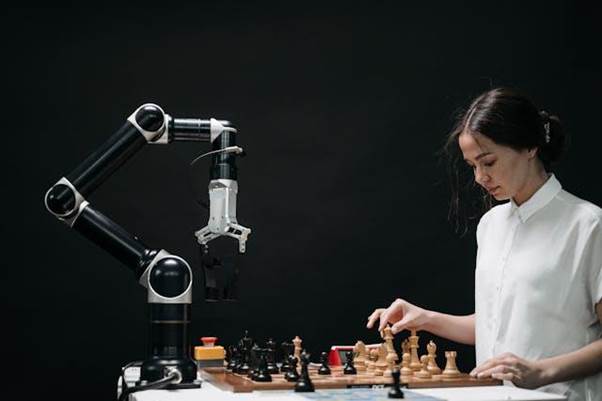
Machine vision has moved far beyond traditional manufacturing and now delivers measurable value across automotive, electronics, pharmaceuticals, food processing, logistics, and agriculture.
- Automotive Manufacturing Vision systems verify weld integrity, inspect paint finishes for micro-defects, confirm component alignment, and guide robotic arms during assembly. Precedence Research identified automotive as the highest-contributing end-use segment in 2024.
- Electronics and Semiconductors Circuit board inspection, solder joint verification, and chip placement accuracy all depend on machine vision operating at micrometer-level precision.
- Pharmaceuticals and Packaging Systems confirm pill counts, verify label accuracy, authenticate serialized codes for regulatory traceability, and detect contamination in sealed containers.
- Food and Beverage Vision-based sorting removes foreign objects, grades produce by size and color, and verifies seal integrity on packaging. MarketsandMarkets forecasts that food and beverage will rank as the fastest-growing segment for machine vision adoption through 2030.
- Logistics and Warehousing Automated barcode scanning, package dimensioning, and robotic pick-and-place systems all rely on integrated vision technology to maintain throughput.
- Agriculture Emerging applications include crop health monitoring via drone-mounted cameras, automated weed identification, and fruit ripeness assessment using hyperspectral imaging.
Benefits and Challenges of Machine Vision
Advantages
- Speed Inspection rates of thousands of items per minute far exceed human capability.
- Consistency Systems deliver identical analytical precision on the first unit and the ten-thousandth without fatigue-driven drift.
- Cost Reduction Automated inspection lowers long-term labor costs and minimizes expensive product recalls caused by undetected defects.
- Data Generation Every inspection creates a digital record, providing manufacturers with rich datasets for process optimization and traceability.
Challenges
- High Initial Investment A 2024 International Society of Automation (ISA) report highlighted that small and medium-sized manufacturers often struggle with the upfront cost of implementing AI-driven vision systems, slowing adoption in cost-sensitive sectors.
- Environmental Sensitivity Variations in ambient lighting, vibration, dust, and temperature can degrade image quality and require careful system engineering to mitigate.
- Integration Complexity Connecting vision systems to existing production line controllers, PLCs, and enterprise software demands specialized expertise that not every facility has in-house.
- Training Data Requirements Deep learning models require large volumes of accurately labeled images to perform reliably, and assembling that dataset can be time-intensive for niche applications.
Conclusion: Machine Vision Is No Longer Optional for Competitive Industries
Machine vision has evolved from a specialized industrial curiosity into a foundational technology that underpins quality control, automation, and intelligent decision-making across virtually every major sector. Its core mechanics image capture, algorithmic processing, and automated decision output remain consistent regardless of whether the system is inspecting microchips in a semiconductor fab or sorting tomatoes in a food processing plant.
The market trajectory confirms this momentum. With valuations surpassing USD 20 billion in 2024 and growth rates projected well above 10% annually by firms like Grand View Research and Precedence Research, the technology is entering a phase of mainstream adoption accelerated by AI integration, smarter cameras, and more accessible software platforms.
Whether you are an engineer evaluating inspection solutions, a business leader exploring automation, or a student researching industrial AI understanding machine vision is no longer a niche advantage.
Have questions about implementing machine vision in your own workflow? Share them in the comments below, or forward this guide to a colleague who is exploring automation options for their production environment.
Frequently Asked Questions
What is machine vision used for? Machine vision is primarily used for automated visual inspection, quality control, dimensional measurement, object identification, and robotic guidance across industries like manufacturing, automotive, pharmaceuticals, and logistics. It enables machines to perform visual tasks faster, more consistently, and more accurately than human inspectors.
How is machine vision different from computer vision? Machine vision is an applied engineering discipline focused specifically on industrial automation tasks within controlled environments such as factory floors. Computer vision is the broader scientific field concerned with teaching machines to interpret visual data from any environment, including unstructured outdoor scenes and consumer applications.
A standard machine vision system consists of five core elements: controlled lighting, a camera or imaging sensor, optical lenses, a processing unit (either PC-based or embedded in a smart camera), and specialized software that runs the inspection algorithms. Each component must be carefully matched to the specific application requirements.
Is machine vision the same as artificial intelligence? Not exactly, though the two increasingly overlap. Traditional machine vision relies on rules-based algorithms programmed by engineers. Modern systems integrate AI particularly deep learning and convolutional neural networks to recognize patterns and defects the system was never explicitly coded to identify. AI enhances machine vision but does not define it entirely.
How much should you expect to pay for a machine vision setup?Costs vary widely based on complexity. A basic smart camera setup for simple barcode reading might start in the low thousands of dollars, while a multi-camera 3D inspection system integrated with deep learning software can reach six figures. Industry research suggests that small and medium businesses often find initial costs to be the biggest barrier to adoption.
What industries benefit most from machine vision? Automotive, electronics, food and beverage, pharmaceuticals, and logistics currently represent the highest-adoption sectors. However, agriculture, healthcare imaging, and autonomous vehicle development are rapidly expanding the technology’s reach into entirely new domains.